
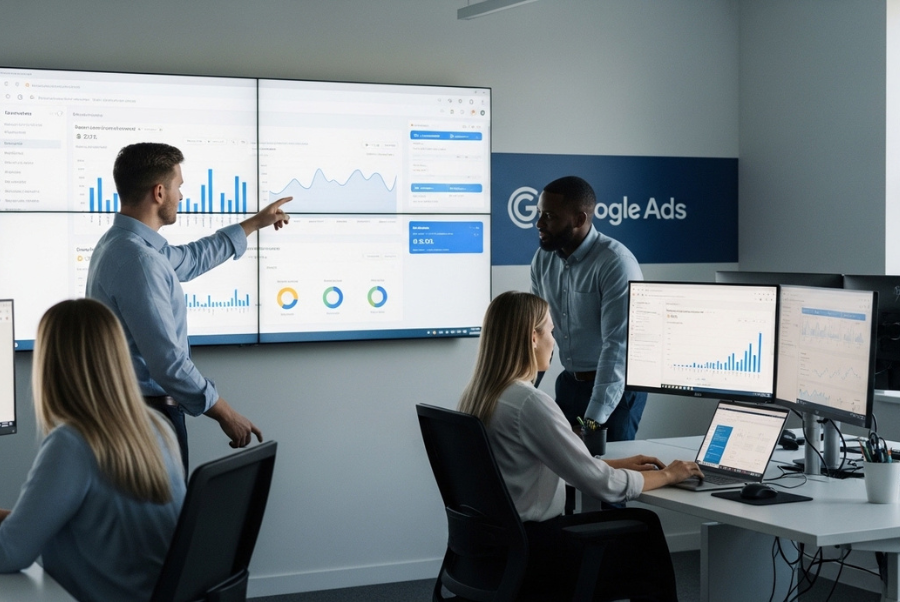
When Google Ads Data Looks Good… But the Phone Isn’t Ringing
Many business owners try Google Ads at some point. The ads run, clicks show up, and traffic starts coming to the website. On the surface it looks promising. But after a few weeks, something feels off. The budget keeps getting used… yet the phone isn’t ringing much.
This is where google ads analytics becomes important.
Without the right tracking in place, it’s almost impossible to know which ads actually bring in real customers. Some campaigns look great on paper, but they don’t produce revenue. Others quietly drive real leads but go unnoticed because the data is incomplete.
The team at Binary Ideas Local Marketing sees this problem often. Around Lorton, Fairfax County, and nearby Northern Virginia business areas, many companies are running ads but don’t truly understand what their data is telling them.
And that’s the tricky part.
The numbers are there. But the story behind the numbers is missing.
“Clicks don’t pay the bills. Calls do.”
When businesses learn how to use google ads analytics the right way, everything starts to make more sense. Ads stop feeling like a gamble and start acting more like a system.
Quick Summary
Google Ads can be powerful, but only when the data behind the campaigns is accurate. Many businesses run ads for months without proper tracking. They see clicks and impressions but don’t know which ads actually create revenue.
This guide explains a simple 7-step framework for google ads analytics that helps businesses track real results. It covers conversion tracking setup, ROI tracking in Google Ads, revenue attribution, and building a clear reporting dashboard.
When these pieces work together, businesses can see which ads generate leads, which keywords waste budget, and where opportunities exist to scale. Around Lorton and Northern Virginia, many business owners discover that fixing analytics is the fastest way to improve advertising performance.
Good data leads to better decisions.
Why Business Owners Just Want Marketing to Make Sense
The people behind Binary Ideas Local Marketing have worked with local businesses for many years. Over time they noticed something interesting. Most business owners don’t mind spending money on marketing.
What they really dislike is not knowing what’s working.
Their belief has always been simple.
Marketing shouldn’t feel mysterious.
It should feel clear.
“Good marketing should feel clear, not confusing.”
Yet many companies are stuck in a cycle that looks like this:
They launch ads.
They see traffic.
But they can’t tell where real customers are coming from.
Sometimes the website form isn’t tracked. Sometimes phone calls aren’t recorded as conversions. And sometimes reports show clicks and impressions but never connect those numbers to revenue.
That’s frustrating.
The team at Binary Ideas often hears the same comment from business owners around Woodbridge, Springfield, and Alexandria.
“Ads are running… but we don’t really know if they’re working.”
This is where the agency steps in as a guide.
Not with complicated dashboards or confusing reports. Instead, they help businesses build a simple system for google ads analytics that tracks what actually matters.
Their plan usually follows a clear path:
- Fix conversion tracking
- Track real ROI
- Connect ad performance to revenue
- Build a reporting dashboard
- Use the data to make smarter decisions
It sounds simple. And honestly… it is.
But when these pieces are missing, businesses can spend thousands on ads without learning anything useful from the results.
“Data should guide decisions, not guesses.”
Once analytics are set up correctly, the transformation is noticeable. Marketing starts feeling less stressful. Reports become easier to understand. And ad budgets start working harder instead of disappearing quietly.
If the Numbers Don’t Make Sense, It Might Be Time to Fix the System
Some businesses eventually reach a point where they realize the issue isn’t the ads themselves. It’s the tracking behind them.
If someone feels ready to figure out what their advertising data is actually saying, the team at Binary Ideas is always open to a conversation.
👉 Business owners can reach out here:
https://binaryideas.com/contact-us/
Binary Ideas Local Marketing
9525 4th Place
Lorton, VA 22079
Phone: (703) 690-9726
There’s no complicated pitch waiting on the other side. Usually it just starts with a simple discussion about what data is being tracked and what might be missing.
“Local businesses don’t need more tools. They need direction.”
For many companies across Northern Virginia, fixing their analytics turns out to be the first real step toward predictable marketing results.
The 7-Step Framework for Smarter Google Ads Analytics
Why Google Ads Data Often Misleads Business Owners
Many businesses start running ads and immediately look at the numbers inside the account.
Clicks.
Impressions.
Cost per click.
On the surface, it feels like progress.
But the team at Binary Ideas Local Marketing often notices something when they review accounts for companies around Lorton, Springfield, and Woodbridge.
The numbers look busy… but they don’t answer the one question that really matters.
Did the ads actually bring in customers?
This is where google ads analytics often gets misunderstood. Google Ads shows a lot of data, but if conversion tracking is incomplete or missing, the reports don’t tell the full story.
Some campaigns might be driving calls but not getting credit.
Other campaigns might be eating budget without generating leads.
And when businesses only look at surface metrics, they end up making decisions based on incomplete information.
“More data doesn’t mean better decisions. Clear data does.”
That’s why a structured approach to google ads analytics is so important. Instead of reacting to random numbers, businesses can build a system that reveals what’s actually happening inside their campaigns.
Step 1 — Fix Conversion Tracking Before Anything Else
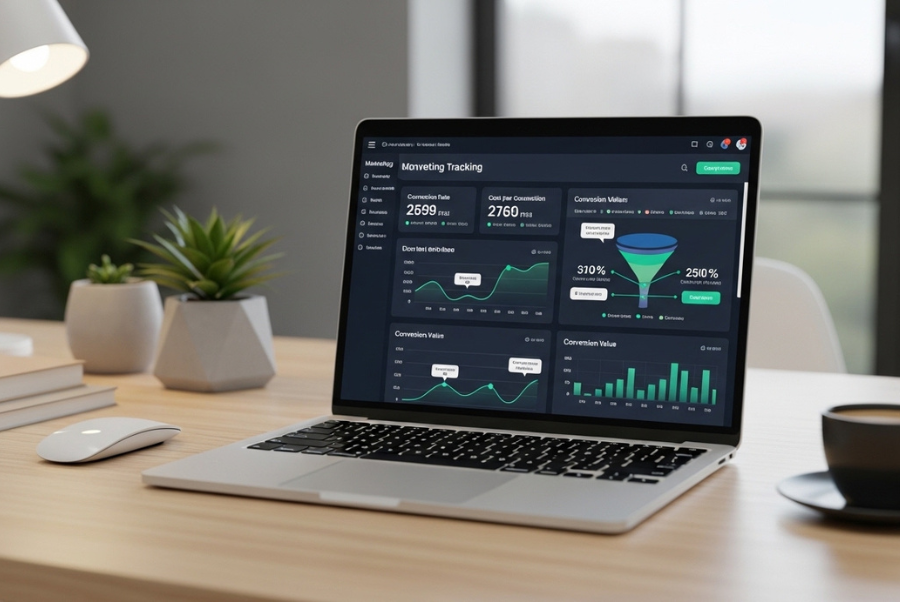
If there’s one place where things usually break, it’s conversion tracking.
The Binary Ideas team often sees accounts where ads have been running for months, but the conversion tracking setup is either missing or only partially working.
Maybe the contact form is tracked.
But phone calls aren’t.
Or maybe calls are tracked, but quote requests from the website aren’t.
Without proper conversion tracking, google ads analytics becomes unreliable.
Businesses start optimizing for clicks instead of leads. That’s when ad budgets slowly disappear without producing much return.
A proper conversion tracking setup should include:
• Contact form submissions
• Phone call tracking
• Appointment bookings
• Live chat inquiries
• Key actions that show real customer intent
Once these conversions are recorded correctly, google ads analytics becomes far more useful.
Suddenly the reports start answering real questions.
Which keywords generate calls?
Which ads produce leads?
Which campaigns waste budget?
The data begins to tell a story.
Step 2 — Connect ROI Tracking Directly to Revenue
Once conversions are tracked, the next step is linking those conversions to actual value.
This is where ROI tracking Google Ads becomes powerful.
Many businesses stop at counting leads. But not every lead has the same value. Some inquiries turn into small jobs. Others turn into large projects.
Without revenue tracking, campaigns might look equal when they’re actually very different.
Binary Ideas often encourages businesses to assign values to conversions. This helps google ads analytics calculate true return on investment.
For example:
• Phone call lead value
• Consultation booking value
• Service request value
When those values are connected to campaigns, reports start showing something much more meaningful than clicks.
They show revenue attribution.
“If you can’t see revenue in the data, the picture is incomplete.”
This step alone often changes how businesses manage their ad budgets.
Step 3 — Build a Clear Google Ads Reporting Dashboard
Another challenge businesses face is scattered data.
Some numbers are in Google Ads.
Others live in Google Analytics.
Phone tracking may exist in a separate system.
When everything is spread out, it becomes difficult to understand performance.
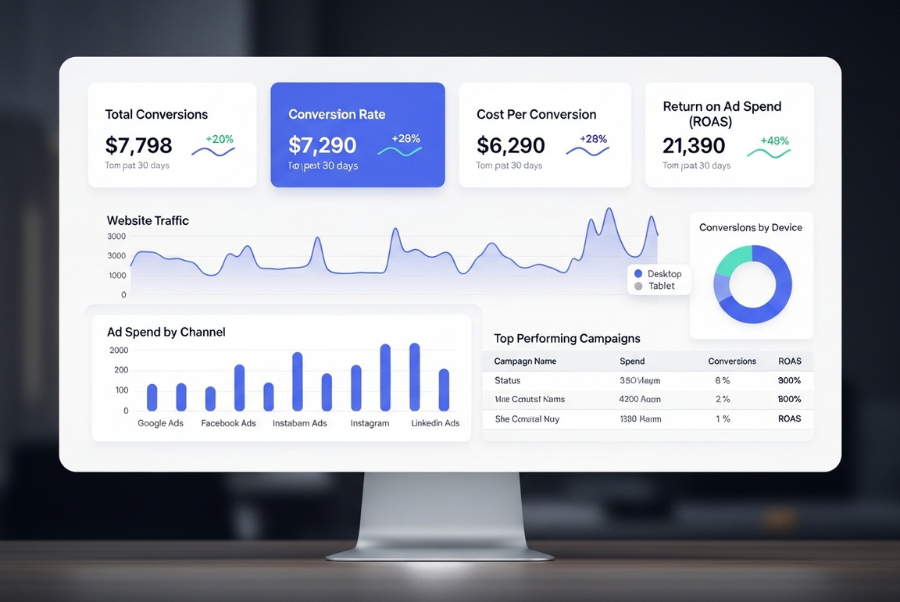
This is where a google ads reporting dashboard helps.
Instead of digging through multiple platforms, businesses can see their most important PPC performance metrics in one place.
Typical dashboards include:
• Cost per lead
• Conversion rate
• Cost per conversion
• Top performing keywords
• Revenue generated by campaigns
The team at Binary Ideas usually recommends dashboards that are simple enough for business owners to review weekly.
Not complicated.
Just clear.
And when the data is presented this way, google ads analytics becomes much easier to understand.
Step 4 — Focus on the PPC Performance Metrics That Actually Matter
There are dozens of numbers inside Google Ads. Many of them sound impressive but don’t really guide decisions.
The Binary Ideas team often sees businesses focusing on metrics like:
• impressions
• click-through rate
• average position
Those numbers are interesting, but they don’t always tell you if ads are producing revenue.
For practical google ads analytics, a few metrics matter much more.
Key PPC performance metrics include:
• Cost per lead
• Conversion rate
• Cost per acquisition
• Revenue generated per campaign
• Return on ad spend
When businesses focus on these numbers, decision-making becomes simpler.
Campaigns that produce leads get more budget.
Campaigns that waste money get adjusted or paused.
“Metrics should lead to action, not confusion.”
That mindset alone can change how businesses approach advertising.
Step 5 — Understand Revenue Attribution

Revenue attribution is one of the most overlooked parts of google ads analytics.
It answers a simple but important question:
Which ads actually led to a sale?
Sometimes customers don’t convert immediately. They might click an ad, visit the website, leave, then return later through another search.
Without proper revenue attribution, that first ad click may never get credit.
Binary Ideas often explains to business owners that customer journeys are rarely linear. People research, compare options, and sometimes come back days later.
Good google ads analytics takes these journeys into account.
By analyzing attribution data, businesses can see which campaigns assist conversions, not just the final click.
This helps reveal hidden value in campaigns that might otherwise appear underperforming.
Step 6 — Identify and Eliminate Wasted Ad Spend
Once accurate tracking is in place, wasted budget becomes much easier to spot.
This is often the moment when businesses realize how valuable google ads analytics really is.
For example, the team sometimes notices patterns like:
• Keywords generating clicks but no conversions
• Campaigns with high cost but low lead volume
• Ads targeting locations outside the service area
Without analytics, these issues remain hidden.
But when the data is clear, businesses can adjust campaigns quickly.
They might pause underperforming keywords.
Refine targeting areas.
Or shift budgets toward better performing campaigns.
Over time, these adjustments help improve overall performance.
And ad budgets start working much harder.
Step 7 — Create a Weekly Analytics Review Habit
The final step in a strong google ads analytics framework is consistency.
Even well-configured campaigns need regular review.
Binary Ideas usually recommends a simple weekly check-in that takes about 15–20 minutes.
Business owners or marketing teams can review:
• new leads generated
• cost per lead changes
• top performing keywords
• campaigns with rising costs
This regular review prevents small issues from turning into expensive problems.
It also helps businesses spot opportunities to grow campaigns that are already producing good results.
“Small adjustments every week often prevent big mistakes later.”
When businesses follow a structured process like this, advertising stops feeling like guesswork. The data becomes clearer, decisions become easier, and marketing begins to feel more predictable.
Why Google Ads Analytics Matters for Northern Virginia Businesses
Businesses in Northern Virginia operate in a competitive environment. Whether it’s a service company in Lorton, a contractor in Woodbridge, or a professional office in Alexandria, customers today usually start their search online.
Most of those searches happen on a phone.
Someone might search for a service while sitting at home in Springfield or while walking through Occoquan. Within seconds they see a mix of ads, local listings, and websites. That first impression often decides which business gets the call.
Because of this, many companies turn to Google Ads to appear quickly in those search results.
But competition also means ad budgets can disappear fast.
Without proper google ads analytics, businesses might assume their ads are working simply because traffic is coming in. Yet when the data is reviewed closely, some campaigns generate real leads while others quietly drain the budget.
The team at Binary Ideas Local Marketing often sees this pattern across Fairfax County and surrounding areas. Businesses invest in ads, but the tracking behind the campaigns is incomplete.
When analytics are set up correctly, something interesting happens.
Marketing becomes easier to understand.
Owners can clearly see:
• which keywords bring phone calls
• which campaigns create appointments
• which ads attract serious buyers
That clarity helps businesses make smarter decisions with their budgets.
“The clearer the data, the calmer the marketing.”
And in busy markets like Northern Virginia, that clarity can make a huge difference.
What Trusted Marketing Experts Say About Tracking
Reliable analytics isn’t just an agency preference. It’s something major marketing authorities emphasize as well.
According to resources from Google’s Search documentation, accurate measurement and tracking are essential for understanding campaign performance and making informed marketing decisions.
Similarly, research and educational materials from HubSpot often highlight the importance of connecting marketing activity directly to revenue rather than relying on surface-level metrics.
The team at Binary Ideas stays aligned with these kinds of best practices when helping businesses set up google ads analytics systems.
Instead of focusing on vanity numbers, their goal is to help businesses measure the things that truly matter:
• leads
• calls
• sales
• revenue attribution
Because at the end of the day, marketing data should answer one simple question.
Is the investment producing real growth?
Conclusion — When Marketing Data Finally Makes Sense
Many businesses start advertising online with good intentions. They want more visibility, more calls, and more customers. But without reliable google ads analytics, advertising can quickly become confusing.
Numbers appear everywhere, yet none of them seem to explain what’s actually working.
The seven-step framework in this guide helps change that.
When businesses focus on conversion tracking setup, ROI tracking Google Ads, revenue attribution, and meaningful PPC performance metrics, they begin to see the real picture behind their campaigns.
What once felt like guesswork starts to feel structured.
The team at Binary Ideas Local Marketing has seen this shift happen many times. Once the analytics are working correctly, business owners often feel a sense of relief.
Finally, the numbers make sense.
Budgets become easier to manage.
Campaigns become easier to improve.
And growth becomes easier to predict.
“Good marketing becomes simple when the data tells the truth.”
Quick Summary
Google Ads can generate strong results, but only when the data behind the campaigns is accurate. Many businesses rely on clicks and impressions as indicators of success, yet those numbers rarely reveal which ads actually produce customers.
A structured google ads analytics framework helps businesses connect advertising activity to real outcomes. By fixing conversion tracking setup, implementing ROI tracking Google Ads, building a reporting dashboard, and analyzing meaningful PPC performance metrics, companies can understand which campaigns produce revenue and which ones waste budget.
Across Lorton and Northern Virginia, businesses that improve their analytics often discover hidden opportunities to scale profitable campaigns while eliminating ineffective ones.
Clear data leads to smarter decisions.
Related Reads
Understanding google ads analytics is only one part of building profitable advertising campaigns. Businesses that want consistent results usually combine analytics with strong strategy and ongoing optimization.
If you’d like to explore this topic further, these guides expand on other key areas of successful Google Ads management:
• How to Build a Powerful 5-Step Google Ads Strategy That Drives Predictable Growth
• 9 Proven Google Ads Optimization Tactics That Instantly Improve ROI
• Is Your Google Ads Budget Failing? 6 Smart Fixes That Prevent Overspending
Together, these resources help businesses understand not just how to measure their ads—but how to improve them.
Frequently Asked Questions About Google Ads Analytics
What is Google Ads analytics?
Google Ads analytics refers to the process of tracking, analyzing, and interpreting advertising data from Google Ads campaigns. It helps businesses understand which ads generate leads, calls, and revenue rather than just clicks or impressions.
Why is conversion tracking important in Google Ads?
Conversion tracking records actions like form submissions, phone calls, or bookings. Without it, businesses can’t accurately measure campaign success. Around Northern Virginia, many businesses discover their ads improve quickly once conversion tracking is fixed.
What metrics matter most in Google Ads analytics?
The most useful PPC performance metrics include cost per lead, conversion rate, cost per acquisition, and return on ad spend. These metrics help businesses connect advertising activity to real results.
What is ROI tracking in Google Ads?
ROI tracking Google Ads connects campaign activity directly to revenue. Instead of just counting leads, businesses assign value to conversions and measure how much revenue their ads generate.
How often should Google Ads analytics be reviewed?
Many marketing teams review campaign performance weekly. A short review of leads, costs, and keyword performance can help businesses identify problems early and improve results.
Do small businesses really need Google Ads analytics?
Yes. Even small ad budgets benefit from accurate tracking. In competitive areas like Fairfax County, Lorton, and Alexandria, analytics helps ensure marketing dollars are spent wisely.
Spending on Ads but Not Sure What’s Working?
If your ads are running but the numbers don’t quite add up, it might be time to take a closer look at the analytics behind them.
The team at Binary Ideas Local Marketing helps businesses build clear marketing systems that track leads, calls, and real revenue — not just clicks.
👉 Schedule a conversation here:
https://binaryideas.com/contact-us/
Binary Ideas Local Marketing
9525 4th Place
Lorton, VA 22079
Phone: (703) 690-9726
For many businesses across Northern Virginia, improving their analytics becomes the turning point where advertising finally starts making sense.
“You can’t fix what you can’t see.”