

Businesses that want sustainable growth must learn how to scale lead generation without simply increasing marketing spend. The most effective approach combines AI automation, search engine optimization (SEO), and paid advertising into a system that consistently attracts, nurtures, and converts prospects.
Companies that rely on referrals or a single marketing channel often hit a growth ceiling. By integrating AI, SEO, and paid ads, businesses can create predictable lead generation systems that produce more qualified opportunities while improving efficiency and return on investment.
Ready to Build a Scalable Lead Generation System?
Binary Ideas Local Marketing helps businesses implement AI-powered marketing systems designed to generate and convert more leads.
Binary Ideas Local Marketing
9525 4th Place, Lorton, VA 22079
Phone: (703) 690-9726
What Does It Mean to Scale Lead Generation?
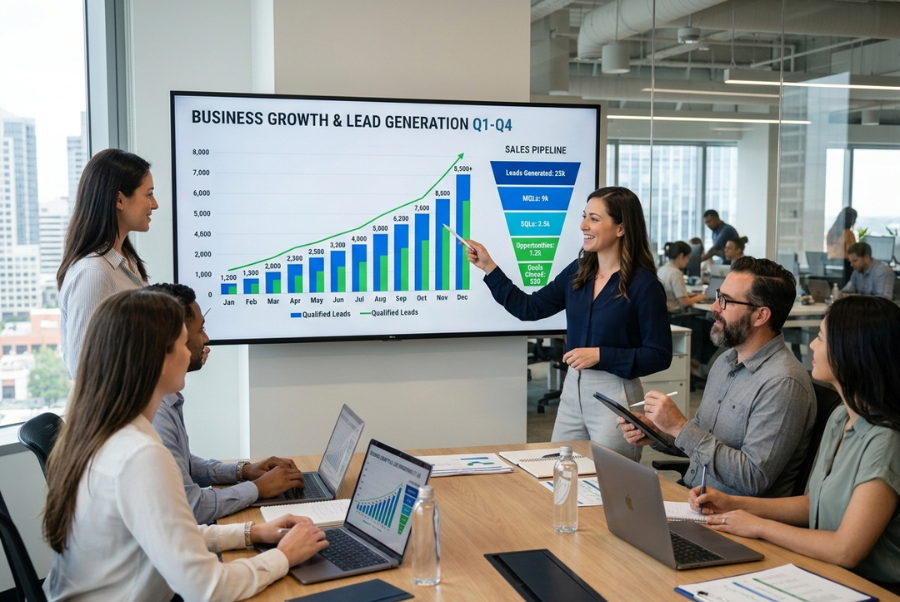
Scaling lead generation means increasing the number of qualified leads your business receives without causing costs and workload to grow at the same rate.
Many businesses can generate leads occasionally. The challenge is generating them consistently and predictably. A scalable lead generation system allows your company to handle increased demand while maintaining lead quality and profitability.
For example, a contractor receiving five leads per month from referrals may struggle to grow. By implementing SEO, Google Ads, and AI-powered follow-up systems, that same contractor could consistently generate 30–50 qualified leads each month.
The goal is not simply more leads. The goal is more qualified leads that can realistically become customers.
How AI, SEO, and Paid Ads Work Together to Generate More Leads
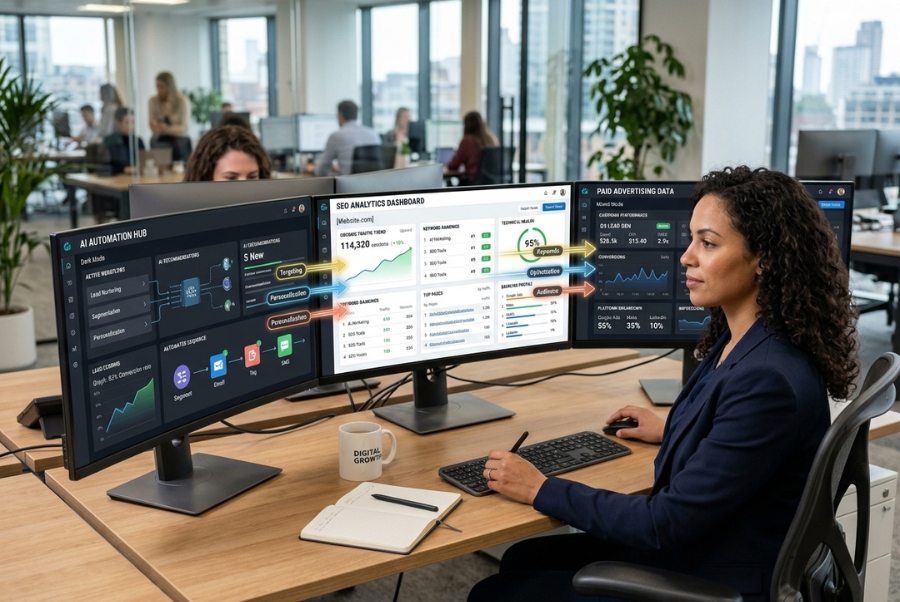
Many businesses treat SEO, paid advertising, and automation as separate strategies. The highest-performing companies combine them into a single lead generation ecosystem.
SEO generates long-term visibility. When prospects search for services online, optimized content and local search presence help businesses appear in search results. According to Google’s Search Central guidelines, strong SEO helps businesses improve discoverability and attract relevant traffic.
Paid advertising generates immediate visibility. Google Ads and Facebook Ads allow businesses to appear in front of highly targeted audiences while SEO gains momentum.
AI automation connects everything together. Instead of manually responding to every inquiry, AI systems can:
- Qualify leads
- Send automated follow-ups
- Schedule appointments
- Answer common questions
- Route prospects to the correct sales process
For example, a prospect may discover your business through SEO, click a retargeting ad later, and then interact with an AI chatbot that schedules a consultation automatically.
This integrated approach creates a more efficient lead generation engine.
How to Build a Scalable Lead Generation System
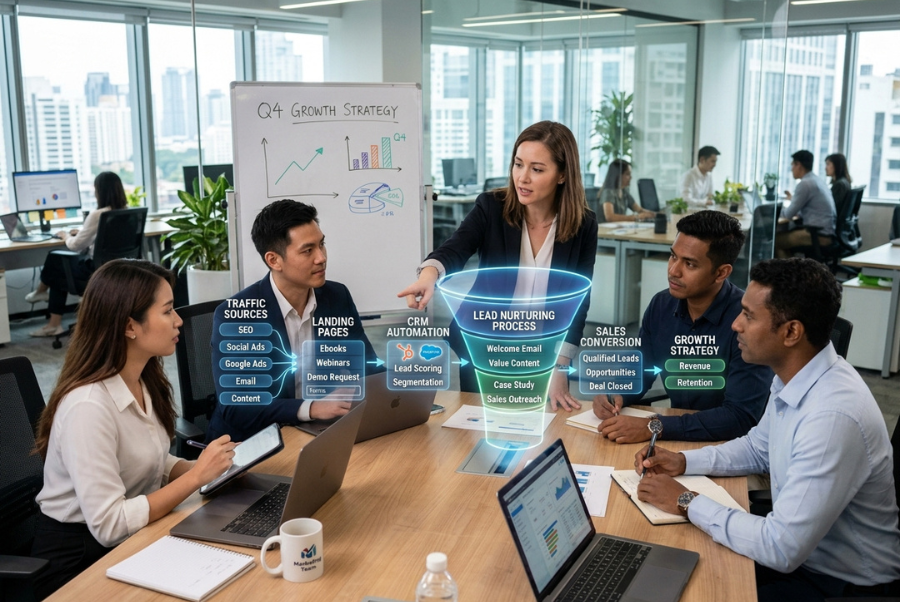
Businesses that successfully scale lead generation typically follow a structured framework.
Step 1: Establish Lead Sources
Start with reliable traffic channels.
Common lead sources include:
- Local SEO
- Google Business Profile
- Google Ads
- Facebook Ads
- Referral programs
- Content marketing
Diversifying lead sources reduces risk and increases stability.
Step 2: Create Lead Capture Mechanisms
Once visitors arrive, they need a clear path to conversion.
Examples include:
- Contact forms
- Landing pages
- Call tracking systems
- Live chat
- AI chatbots
- Appointment booking tools
Without strong conversion pathways, traffic will not become leads.
Step 3: Automate Follow-Up
Most businesses lose leads because follow-up is inconsistent.
AI lead generation systems can automatically:
- Send text messages
- Send email sequences
- Schedule reminders
- Re-engage inactive prospects
Research consistently shows that faster response times significantly improve conversion rates.
Step 4: Measure and Optimize
Track metrics such as:
- Cost per lead
- Conversion rate
- Appointment rate
- Customer acquisition cost
- Return on ad spend
Continuous optimization is what allows lead generation systems to scale efficiently.
Real-World Scaling Example
Consider an HVAC company generating approximately 20 leads per month through referrals alone. By implementing Local SEO to improve Google visibility, Google Ads to capture high-intent searches, and AI automation for follow-up, the company could increase lead volume to 80–100 qualified leads per month within several months.
The key is not simply generating more traffic. The combination of multiple lead sources, automated follow-up, and ongoing optimization creates a repeatable system capable of supporting long-term growth.
How Much Does It Cost to Scale Lead Generation?
The cost of scaling lead generation varies depending on competition, industry, and growth objectives.
Typical Monthly Investment Ranges
| Strategy | Typical Monthly Cost |
| Local SEO | $750–$3,000+ |
| Google Ads | $1,000–$10,000+ ad spend |
| Facebook Ads | $500–$5,000+ ad spend |
| AI Automation Systems | $500–$3,000+ |
| CRM & Marketing Software | $100–$1,000+ |
Northern Virginia Market Considerations
Businesses operating in Northern Virginia often face higher competition levels than smaller markets. Industries such as legal services, home services, healthcare, and professional services frequently experience higher advertising costs due to increased demand and competition.
Because of this, businesses should focus on lead quality and customer acquisition cost rather than selecting the lowest-cost marketing option. A higher-performing system often produces a stronger return on investment despite higher initial spending.
Several factors influence costs:
- Market competition
- Geographic target area
- Lead quality requirements
- Ad spend levels
- Technology stack
- Sales process complexity
A common mistake is focusing solely on cost. Businesses should evaluate marketing investments based on cost per lead and customer acquisition cost rather than monthly spending alone.
Practical Example
A business spending $3,000 monthly and generating 60 qualified leads has a cost per lead of $50.
A competitor spending $1,500 monthly but generating only 10 leads effectively pays $150 per lead.
The cheaper budget is not always the more profitable option.
Options for Scaling Lead Generation
There is no single approach that works for every business.
Option 1: SEO-First Strategy
Best for businesses seeking long-term growth.
Advantages:
- Sustainable traffic
- Lower long-term acquisition costs
- Increased credibility
Limitations:
- Slower initial results
- Competitive industries require patience
Option 2: Ads-First Strategy
Best for businesses needing immediate leads.
Advantages:
- Fast traffic
- Predictable volume
- Precise targeting
Limitations:
- Continuous spending required
- Rising advertising costs
Option 3: AI Automation Strategy
Best for businesses already generating leads but struggling with follow-up.
Advantages:
- Improved efficiency
- Faster response times
- Better conversion rates
Limitations:
- Requires process design
- Technology implementation needed
Option 4: Fully Integrated Growth System
This combines:
- SEO
- Paid Ads
- AI Automation
- Retargeting
- CRM Automation
For most growth-focused businesses, this approach delivers the highest scalability and long-term ROI.
Is Scaling Lead Generation with AI, SEO, and Ads Worth It?
For many businesses, the answer is yes.
The primary benefit is predictability. Instead of relying on inconsistent referrals or seasonal demand, businesses can build repeatable lead generation systems.
Additional benefits include:
- More qualified leads
- Faster response times
- Better customer experiences
- Improved conversion rates
- Higher marketing efficiency
One overlooked advantage is operational scalability. AI systems can manage a growing volume of inquiries without requiring proportional increases in staffing.
This means businesses can grow revenue while maintaining operational efficiency.
Key ROI Indicators
A scalable system often improves:
- Lead volume
- Appointment rates
- Customer acquisition costs
- Sales conversion rates
- Overall marketing ROI
When implemented properly, AI lead generation systems create compounding returns over time.
Real ROI Example
Consider a home services company investing $4,000 per month in SEO, Google Ads, and AI automation.
Before implementing a scalable lead generation system, the company generated approximately 15 leads per month through referrals. After six months, lead volume increased to 60 qualified leads per month while reducing response times and improving appointment booking rates.
Although marketing investment increased, the lower cost per acquisition and higher customer volume resulted in a significantly stronger return on investment.
Advanced Metrics That Matter When Scaling
As lead generation grows, businesses should track more than lead volume and cost per lead. Advanced growth-focused organizations monitor:
- Lead Velocity Rate (LVR) — Measures how quickly qualified leads are increasing month over month.
- Pipeline Value — The total potential revenue generated from active opportunities.
- Sales Cycle Length — Tracks how long it takes prospects to become customers.
- Customer Acquisition Cost (CAC) — Evaluates how efficiently marketing spend converts into revenue.
- Marketing-Sourced Revenue — Measures revenue directly attributable to marketing efforts.
These metrics provide a more complete picture of growth and help identify opportunities to improve ROI as lead generation scales.
What to Expect When Implementing a Lead Generation System
Businesses should understand that scaling lead generation is a process rather than a one-time project.
The first month often focuses on:
- Setup
- Tracking
- Funnel development
- Automation configuration
Months two through three typically involve optimization and data collection.
By months three through six, businesses often begin seeing stronger trends, improved lead quality, and more predictable results.
Organizations that commit to ongoing optimization generally achieve better long-term outcomes than those seeking immediate shortcuts.
How to Choose the Right Marketing Partner
Not all agencies are equipped to build scalable lead generation systems.
When evaluating a provider, consider:
- Experience with AI automation
- Proven SEO expertise
- Paid advertising management capabilities
- Conversion optimization knowledge
- Reporting transparency
Ask potential partners:
- How do you measure lead quality?
- What KPIs do you track?
- How do you improve conversion rates?
- What automation systems do you recommend?
The best marketing partners focus on revenue growth rather than vanity metrics.
Key Takeaways
- Scaling lead generation requires systems, not isolated campaigns.
- SEO provides long-term visibility and authority.
- Paid advertising creates immediate lead opportunities.
- AI automation improves response speed and conversion rates.
- Combining SEO, ads, and automation creates the most scalable growth model.
- Success should be measured by ROI, lead quality, and customer acquisition costs—not just lead volume.
Frequently Asked Questions
How long does it take to scale lead generation?
Paid advertising can generate leads quickly, often within days or weeks. SEO generally requires several months to build momentum. Businesses using both strategies typically achieve the most balanced results.
Is SEO or paid advertising better for scaling?
Neither is universally better. SEO delivers long-term growth, while paid ads provide immediate opportunities. Combining both usually creates the strongest lead generation system.
How does AI improve lead generation?
AI improves lead generation by automating follow-up, qualifying prospects, scheduling appointments, and maintaining engagement. This reduces response times and helps businesses convert more opportunities.
What is a good cost per lead?
A good cost per lead depends on industry and customer value. High-ticket services may profitably acquire leads at much higher costs than lower-value businesses.
Can small businesses benefit from AI lead generation systems?
Yes. Small businesses often benefit significantly because automation helps them compete with larger organizations without hiring additional staff.
Should I invest in SEO, Google Ads, or AI first?
The best starting point depends on your current situation. Businesses needing immediate leads often begin with Google Ads, while businesses focused on long-term growth invest heavily in SEO. AI automation delivers the greatest value when lead volume already exists and follow-up efficiency becomes a bottleneck. Many businesses achieve the best results by gradually combining all three strategies.
Scale Your Lead Generation with Binary Ideas Local Marketing
If your business is ready to build a predictable lead generation system, Binary Ideas Local Marketing can help. Our team combines AI automation, Local SEO, and paid advertising strategies to create scalable growth systems that generate qualified leads and measurable ROI.
Schedule a strategy session today to discover how AI, SEO, and paid advertising can work together to help your business attract more prospects, improve conversion rates, and scale efficiently.
Binary Ideas Local Marketing
9525 4th Place, Lorton, VA 22079
Phone: (703) 690-9726
Website: https://binaryideas.com/
Contact Us: https://binaryideas.com/contact-us/
Related Resources
- What Is Local SEO and How It Helps You Rank and Get More Leads
- How AI + Ads System Generates Consistent Leads for Businesses
Services
External Resources
- Google Search Central: https://developers.google.com/search
- U.S. Small Business Administration: https://www.sba.gov
- HubSpot Marketing Research: https://www.hubspot.com