Automotive businesses that consistently attract local customers typically combine strong online visibility with targeted lead generation strategies. Effective marketing for automotive services involves a mix of local SEO, paid advertising, reputation management, and increasingly, AI-powered systems that help convert interest into appointments.
If you’re an automotive business owner trying to increase car count, generate more service appointments, and build long-term growth, understanding which marketing strategies work—and which offer the best return on investment—is essential.
Exploring Ways to Grow Your Automotive Business?
If you’re evaluating different marketing options for your auto repair shop or automotive service business, understanding what works—and what aligns with your goals and budget—can help you make a more confident decision. Speaking with an experienced team may also provide clarity on which strategies are most appropriate for your market.
Binary Ideas Local Marketing
9525 4th Place, Lorton, VA 22079
Phone: (703) 690-9726
Website: https://binaryideas.com/
What Is Marketing for Automotive Services?
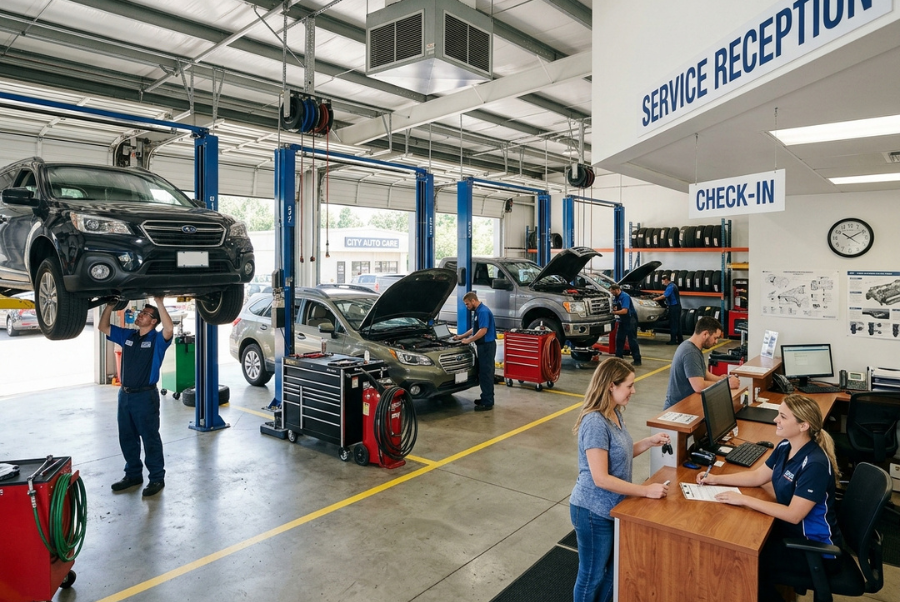
Marketing for automotive services refers to the strategies used by auto businesses to attract new customers, retain existing ones, and increase revenue through both online and offline channels.
Modern automotive marketing often includes:
- Local SEO
- Google Ads
- Facebook Ads
- Online reputation management
- Website optimization
- AI-powered lead nurturing systems
Because consumers increasingly research businesses before scheduling services, maintaining an optimized online presence is critical. According to the U.S. Small Business Administration, digital marketing has become one of the most cost-effective methods for reaching local audiences and building brand awareness.
How Automotive Marketing Works
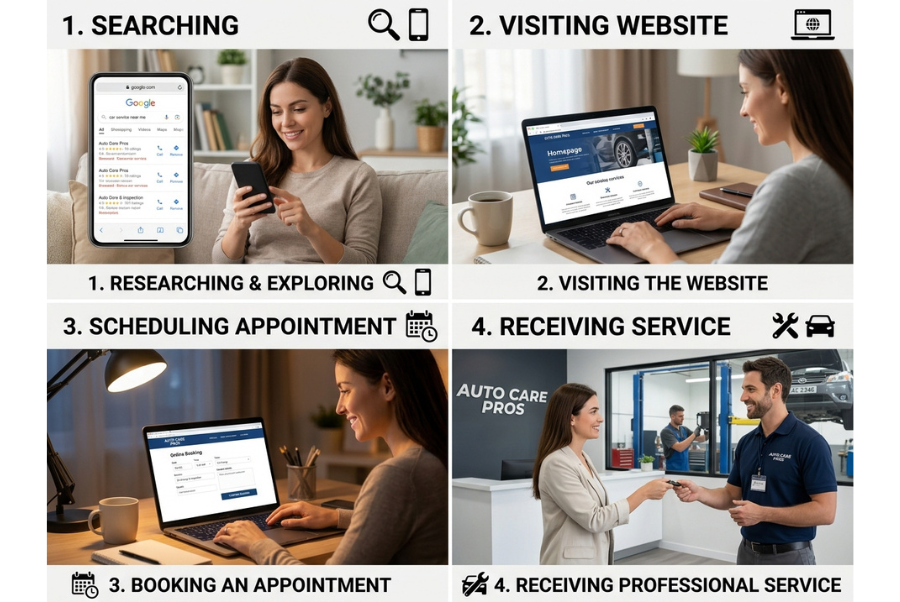
Successful marketing systems work by guiding potential customers through a journey—from awareness to appointment scheduling.
Step 1: Increase Visibility
Customers first need to discover your business. This typically happens through:
- Google Business Profile listings
- Organic search rankings
- Paid advertisements
- Social media exposure
Step 2: Build Trust
Once people find your business, they evaluate whether they can trust you.
Trust signals include:
- Positive reviews
- Professional website design
- Clear service information
- Before-and-after examples
- Certifications and affiliations
Step 3: Generate Appointments
The goal is to convert interested prospects into booked appointments.
Effective conversion tools include:
- Online scheduling forms
- Click-to-call functionality
- Automated follow-ups
- Retargeting campaigns
Step 4: Encourage Repeat Business
Customer retention often provides the highest ROI.
Examples include:
- Maintenance reminders
- Seasonal service promotions
- Loyalty programs
- Email follow-up campaigns
Now that you understand how automotive marketing guides prospects from discovery to loyalty, let’s examine the investment required to support these efforts effectively.
How Much Does Automotive Marketing Cost?
Marketing costs vary depending on goals, competition, and the channels used.
Typical Monthly Investment Ranges
| Marketing Strategy | Typical Monthly Cost |
| Local SEO | $750–$2,500+ |
| Google Ads | $1,000–$5,000+ ad spend |
| Facebook Ads | $500–$2,000+ ad spend |
| Reputation Management | $200–$800 |
| AI Automation Systems | $500–$3,000+ |
| Website Optimization | $500–$2,500 |
Factors That Influence Cost
Several variables impact pricing:
- Market competitiveness
- Geographic service area
- Number of services promoted
- Advertising budget
- Existing online presence
- Level of automation desired
While cost is important, evaluating potential returns is even more critical.
Automotive Marketing Options
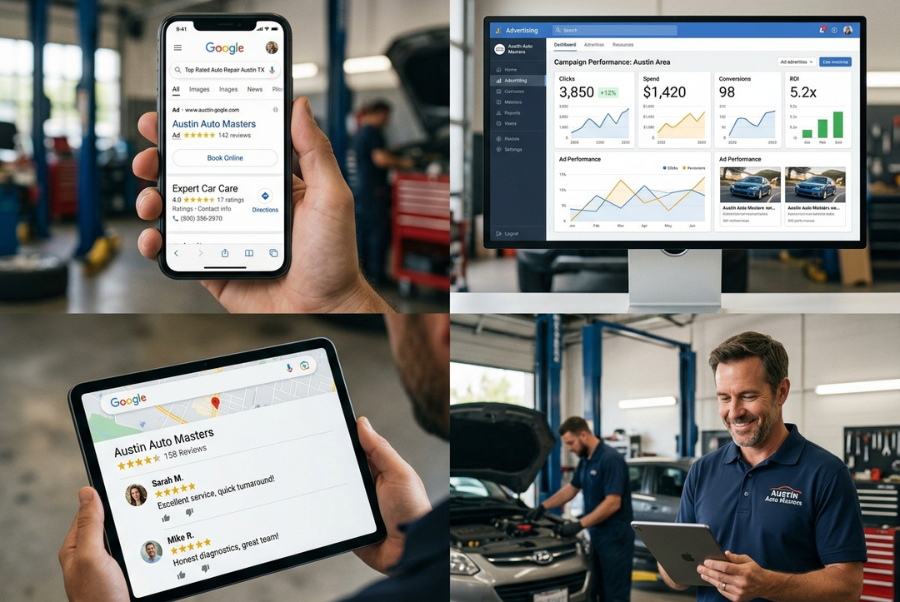
Different strategies serve different purposes.
Local SEO
Best for:
- Long-term visibility
- Capturing high-intent searches
- Building authority locally
Potential downside:
- Results typically take several months.
Google Ads
Best for:
- Immediate lead generation
- Promoting high-value services
- Increasing visibility quickly
Potential downside:
- Leads stop when campaigns stop.
Facebook Ads
Best for:
- Brand awareness
- Seasonal promotions
- Community engagement
Potential downside:
- Lower purchase intent compared to Google searches.
AI-Powered Marketing Systems
Best for:
- Faster follow-up
- Lead nurturing
- Improving operational efficiency
Potential downside:
- Requires thoughtful implementation.
Combined Strategy
Many successful automotive businesses integrate multiple channels simultaneously.
For example:
- SEO builds sustainable traffic.
- Google Ads generate immediate opportunities.
- AI systems improve conversion rates.
- Reputation management strengthens trust.
This diversified approach often reduces reliance on any single source of leads.
Comparing Automotive Marketing Strategies
The table below provides a simplified comparison of common marketing approaches used by automotive businesses.
| Strategy | Speed of Results | Typical Investment | Long-Term Value | Best For |
| Local SEO | Slow (3–6 months) | $$ | Very High | Sustainable growth |
| Google Ads | Fast (Days) | $$$ | Moderate | Immediate leads |
| Facebook Ads | Moderate | $$ | Moderate | Brand awareness |
| AI Automation | Moderate | $$–$$$ | High | Improving efficiency |
| Combined Strategy | Moderate | $$$ | Very High | Maximum growth potential |
Now that you understand the strengths and limitations of each option, the next step is determining which mix aligns best with your goals, budget, and growth objectives.
Is Automotive Marketing Worth It? (ROI)
The value of marketing depends largely on execution, tracking, and customer lifetime value.
A single customer acquisition may lead to:
- Initial repair revenue
- Future maintenance appointments
- Family referrals
- Positive online reviews
- Repeat service opportunities
Practical ROI Example
Consider an independent auto repair shop with the following metrics:
- Monthly marketing investment: $2,500
- Average repair order value: $550
- Appointment close rate from leads: 40%
- Additional appointments generated monthly: 12
In this scenario:
- Revenue generated = $6,600 per month
- Marketing investment = $2,500
- Estimated gross return = 2.6× the marketing spend
This calculation becomes even more favorable when factoring in repeat oil changes, brake services, inspections, and referrals. Many automotive businesses underestimate the long-term value of acquiring a single loyal customer.
Businesses should regularly track:
- Cost per lead
- Appointment conversion rate
- Revenue per repair order
- Customer lifetime value
- Return on ad spend
Before increasing your marketing budget, understanding these benchmarks helps ensure your efforts remain profitable and sustainable.
Key Takeaways
- Automotive customers increasingly search online before choosing a provider.
- Local SEO and Google Ads remain powerful acquisition channels.
- AI systems can improve lead response and efficiency.
- Measuring ROI is essential for sustainable growth.
- Combining strategies often produces the strongest results.
What to Expect When Investing in Automotive Marketing
Results vary depending on the strategies used, competition within your market, and the consistency of implementation.
SEO Expectations
- Initial improvements: 3–6 months
- Significant growth: 6–12 months
- Stronger performance in less competitive markets
Google Ads Expectations
- Leads may begin within days
- Campaign optimization often improves performance over several weeks
- Seasonal trends can influence results
Reputation Management Expectations
- Review growth compounds gradually
- Increased trust can improve conversion rates over time
Automotive businesses should establish realistic expectations and evaluate results consistently rather than making decisions based solely on short-term fluctuations.
How to Choose a Marketing Provider
Selecting the right partner can significantly impact results.
Consider asking:
- Do they understand local businesses?
- Can they explain their strategies clearly?
- How do they measure ROI?
- Do they provide transparent reporting?
- Can they share relevant case studies?
Avoid providers that guarantee unrealistic outcomes or cannot explain how their systems work.
The best marketing partnerships focus on long-term business growth rather than short-term vanity metrics.
Frequently Asked Questions
How long does it take for automotive marketing to work?
Google Ads can generate leads relatively quickly, sometimes within days of launching a campaign. Local SEO, however, typically requires several months before meaningful ranking improvements occur. Businesses often see the strongest outcomes when they balance short-term and long-term strategies.
Is SEO better than paid advertising for auto shops?
The answer depends on your goals. SEO provides sustainable visibility and can reduce reliance on paid traffic over time, while advertising helps generate leads more quickly. Many successful automotive businesses combine both approaches to create a predictable flow of new customers.
How much should an automotive business spend on marketing?
Marketing budgets vary based on market competitiveness, growth goals, and average customer value. Rather than focusing solely on percentage-based recommendations, businesses should evaluate spending relative to the revenue generated from acquired customers.
Can small auto shops compete with larger chains?
Yes. Independent shops often have advantages such as personalized service, community relationships, and greater operational flexibility. Strategic local SEO, strong online reviews, and targeted advertising can help smaller businesses compete effectively against larger competitors.
How do I measure marketing success?
Success should be measured using business outcomes rather than vanity metrics. Key indicators include lead volume, booked appointments, revenue generated, customer acquisition cost, and retention rates. Monitoring these figures consistently allows businesses to refine their marketing investments over time.
Conclusion
Effective marketing for automotive services requires more than simply running ads or posting occasionally on social media. Businesses that understand customer behavior, invest strategically, and track performance are better positioned to attract more local customers consistently.
Whether your goal is improving local visibility, generating more service appointments, or implementing AI-powered systems to support growth, choosing the right marketing approach can significantly impact your long-term success.
Ready to Strengthen Your Automotive Marketing Strategy?
If you’re evaluating how to attract more local customers, improve lead quality, and increase long-term profitability, having the right marketing strategy in place can make a significant difference.
Binary Ideas Local Marketing works with local businesses to develop practical, results-focused marketing systems designed to support sustainable growth.
Binary Ideas Local Marketing
9525 4th Place, Lorton, VA 22079
Phone: (703) 690-9726
Website: https://binaryideas.com/
Contact: https://binaryideas.com/contact-us/
Recommended Internal Links
- What Is Local SEO and How It Helps You Rank and Get More Leads
- How Do Google Ads Work for Local Businesses and Generate Leads Fast
- How Contractors Can Generate Consistent Leads Using AI and Ads
- Local SEO Services
Recommended External Resources
- U.S. Small Business Administration – Marketing Resources: https://www.sba.gov/
- Google Business Profile Help Center: https://support.google.com/business/
- SCORE Small Business Marketing Resources: https://www.score.org/
These resources support best practices related to local visibility, business growth, and marketing planning.