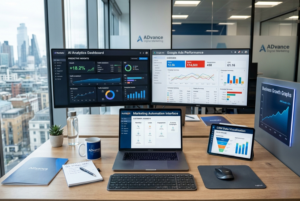

AI automation costs for businesses typically range from a few hundred dollars per month for basic tools to tens of thousands of dollars for fully customized systems. The final investment depends on factors such as automation complexity, software integrations, implementation requirements, and ongoing management needs.
Businesses that understand these pricing factors can make smarter decisions, avoid unnecessary expenses, and invest in automation solutions that deliver measurable ROI through improved efficiency and lead generation.
Ready to Explore AI Automation for Your Business?
If you are looking to automate lead generation, customer communication, appointment scheduling, or repetitive operational tasks, AI automation can help your business become more efficient and scalable.
Binary Ideas Local Marketing
9525 4th Place, Lorton, VA 22079
Phone: (703) 690-9726
What Is AI Automation for Businesses?

AI automation refers to the use of artificial intelligence technologies to automate repetitive business processes, improve decision-making, and increase operational efficiency. Unlike traditional automation, AI-powered systems can analyze information, learn patterns, and adapt responses based on real-world inputs.
Businesses use AI automation across many departments, including marketing, sales, customer service, operations, and administration. Common examples include AI chatbots, automated lead follow-up systems, appointment scheduling tools, customer support assistants, and workflow automation platforms.
For example, a local service business may use AI automation to instantly respond to website inquiries, qualify leads, schedule appointments, and send follow-up reminders without requiring manual staff involvement. This creates a faster customer experience while reducing labor-intensive tasks.
As AI technology becomes more accessible, businesses of all sizes are evaluating whether automation can provide a competitive advantage while reducing operational costs.
How AI Automation Pricing Works

AI automation pricing varies significantly because every business has different workflows, software environments, and operational goals. Most automation investments involve a combination of software licensing, implementation services, and ongoing management.
Some businesses purchase standalone AI tools with monthly subscription fees, while others invest in fully customized automation systems designed specifically for their operations. The more customization and integration required, the higher the overall investment.
Understanding how pricing is structured helps business owners compare options more effectively and avoid focusing solely on the initial monthly software cost.
Common AI Automation Pricing Models
Monthly Subscription Pricing
Many AI platforms charge recurring monthly fees based on:
- Number of users
- Contact volume
- Workflow executions
- AI usage
- Features included
Typical ranges include:
- Basic tools: $100–$500/month
- Growth-stage solutions: $500–$2,000/month
- Advanced enterprise platforms: $2,000+/month
One-Time Setup Fees
Most custom AI automation projects require:
- Workflow planning
- System design
- CRM integration
- Automation testing
- Staff training
Setup costs often range from $1,000 to $25,000+ depending on complexity.
Usage-Based Pricing
Some AI providers charge based on:
- API requests
- AI-generated responses
- Data processing volume
- Customer interactions
This model is particularly common among advanced AI-powered systems.
Now that you understand how pricing models work, let’s examine the factors that directly influence cost.
What Factors Affect AI Automation Cost?

Several variables determine how much AI automation will cost for a business.
Automation Complexity
The biggest pricing factor is the complexity of the workflows being automated.
Simple automations may include:
- Appointment reminders
- Email sequences
- Lead routing
- Review requests
Advanced automations may include:
- AI sales qualification
- Multi-step customer journeys
- Predictive lead scoring
- Automated proposal generation
- Cross-platform workflow orchestration
As workflow complexity increases, implementation time and customization requirements also increase.
Software Integrations
Many businesses rely on multiple systems including:
- CRM software
- Scheduling platforms
- Marketing automation tools
- Payment processors
- Customer support systems
Connecting multiple platforms requires additional development and testing, which impacts pricing.
Customization Requirements
Prebuilt solutions typically cost less because they require minimal configuration.
Custom automation systems are designed around a business’s unique processes and often provide:
- Better scalability
- Improved efficiency
- More advanced automation
- Higher long-term ROI
However, customization requires greater upfront investment.
Industry Compliance Requirements
Industries such as healthcare, legal, and financial services often require:
- Enhanced security
- Compliance protocols
- Secure data handling
- Additional reporting
These requirements increase both implementation and maintenance costs.
Business Size and Volume
Businesses handling larger volumes of leads, customers, or transactions typically require more sophisticated automation systems.
Higher usage often means:
- More workflow executions
- Additional software licenses
- Greater AI processing requirements
- More advanced infrastructure
Cost Breakdown: Understanding the Three Main Cost Categories
Most AI automation investments fall into three primary cost categories.
Software Costs
These recurring expenses include:
- AI software subscriptions
- CRM licensing fees
- Workflow automation platforms
- Third-party integrations
- Usage-based AI fees
Software costs typically represent the ongoing operational expense of automation.
Implementation Costs
Implementation costs include:
- Strategy development
- Workflow mapping
- System configuration
- API integrations
- Testing and deployment
- Team onboarding
These are usually one-time expenses during setup.
Management and Optimization Costs
Many businesses overlook the importance of ongoing optimization.
Management costs often include:
- Performance monitoring
- Workflow updates
- Automation troubleshooting
- Reporting
- Continuous improvements
Businesses that actively optimize their automation systems often achieve significantly higher ROI than those that simply deploy and forget.
AI Automation Pricing Examples for Businesses
The following ranges provide general estimates for common business scenarios.
| Business Type | Monthly Cost | Setup Cost |
| Small Local Business | $300–$1,000 | $1,000–$3,000 |
| Growing Service Business | $1,000–$3,500 | $3,000–$10,000 |
| Multi-Location Business | $3,500–$10,000+ | $10,000–$25,000+ |
| Enterprise Organization | Custom | Custom |
These figures vary depending on workflow complexity, integration requirements, and automation goals.
For example, a contractor may only need automated lead follow-up and appointment scheduling, while a healthcare provider may require patient intake automation, secure communications, and CRM integration across multiple locations.
This difference in operational requirements can create substantial differences in pricing.
AI Automation Tools vs Fully Managed Automation Systems
Businesses generally choose between DIY automation tools and professionally managed automation solutions.
DIY AI Automation Tools
Popular DIY solutions often include:
- Chatbots
- Workflow builders
- Marketing automation software
- CRM automation platforms
Advantages:
- Lower upfront costs
- Faster deployment
- Greater flexibility for experimentation
Disadvantages:
- Requires internal management
- Technical learning curve
- Limited customization
- Potential integration challenges
Fully Managed AI Automation Services
Managed services typically include:
- Strategy
- Setup
- Integration
- Monitoring
- Optimization
- Support
Advantages:
- Professional implementation
- Better scalability
- Reduced internal workload
- Improved long-term performance
Disadvantages:
- Higher investment
- Ongoing management fees
For many businesses, managed services become more cost-effective as operations become more complex.
Is AI Automation Worth It? Understanding ROI
For most businesses, the real question is not how much AI automation costs but whether it generates a positive return on investment.
AI automation can improve:
- Lead response times
- Conversion rates
- Customer experience
- Staff productivity
- Operational efficiency
- Revenue scalability
Consider a business generating 100 leads per month.
Without automation:
- Leads wait hours for responses
- Follow-ups are inconsistent
- Staff manually schedule appointments
With automation:
- Leads receive immediate responses
- Follow-ups happen automatically
- Scheduling becomes seamless
Even a modest increase in conversion rates can generate significant revenue growth over time.
Businesses considering AI automation often benefit from an automation assessment before selecting software or implementation partners. Evaluating current workflows and operational bottlenecks can help identify the areas where automation is most likely to produce measurable returns.
According to the U.S. Small Business Administration (SBA), improving operational efficiency and leveraging technology can help small businesses remain competitive and scale more effectively.
Similarly, NIST’s Artificial Intelligence resources emphasize the importance of implementing AI systems that improve productivity while maintaining reliability and governance standards.
What to Expect During AI Automation Implementation
Many businesses underestimate the planning involved in successful automation projects.
A typical implementation process includes:
- Business process analysis
- Workflow mapping
- Platform selection
- System integration
- Testing and quality assurance
- Staff training
- Performance optimization
Simple systems may launch within a few days, while more advanced implementations can take several weeks.
Businesses should also expect ongoing refinements as customer behavior, operational needs, and business goals evolve.
The most successful automation projects treat implementation as an ongoing improvement process rather than a one-time deployment.
How to Choose the Right AI Automation Provider
Choosing the right provider can have a major impact on both cost and results.
When evaluating providers, consider:
Experience
Look for providers with experience implementing automation systems similar to your business needs.
Integration Expertise
Your provider should understand how to connect multiple platforms and create seamless workflows.
Transparency
Ask for clear pricing explanations that separate:
- Software costs
- Setup fees
- Ongoing management costs
Scalability
Choose solutions that can grow with your business rather than requiring a complete rebuild later.
Support and Optimization
Ongoing support often determines whether automation continues delivering strong results after launch.
Avoid selecting a provider solely based on the lowest price. Long-term value typically matters more than initial cost savings.
Key Takeaways
AI Automation Costs Depend On:
- Workflow complexity
- Number of integrations
- Business size
- Industry requirements
- Customization level
Most Investments Include:
- Software subscriptions
- Setup and implementation
- Ongoing optimization
Potential Benefits Include:
- Improved efficiency
- Better lead conversion
- Faster customer response times
- Reduced labor costs
- Greater scalability
Businesses that focus on ROI rather than upfront costs often achieve the greatest long-term success with automation.
Frequently Asked Questions
How much does AI automation cost for businesses?
Most small businesses spend between $300 and $1,000 per month, while larger organizations may invest several thousand dollars monthly depending on complexity and usage.
What affects AI automation pricing the most?
Automation complexity, software integrations, customization requirements, business size, and ongoing management needs typically have the greatest impact on pricing.
Is AI automation worth the investment?
For many businesses, automation improves efficiency, increases lead conversion rates, reduces labor costs, and creates long-term operational advantages that outweigh the investment.
Can small businesses benefit from AI automation?
Yes. Many small businesses use AI automation for lead management, customer communication, appointment scheduling, marketing workflows, and customer support.
How long does it take to see ROI from AI automation?
Some businesses experience measurable improvements within weeks, while larger implementations may require several months of optimization before reaching peak performance.
Conclusion
AI automation costs vary widely based on business goals, workflow complexity, integrations, and customization requirements. While some businesses can start with affordable automation tools, others may benefit from fully customized systems designed to streamline operations and accelerate growth.
The key is focusing on long-term ROI rather than simply comparing upfront costs. Businesses that implement automation strategically often improve efficiency, reduce operational bottlenecks, and create scalable systems that support future growth.
If you’re evaluating AI automation solutions and want guidance on selecting the right approach for your business, contact Binary Ideas Local Marketing today.
Binary Ideas Local Marketing
9525 4th Place, Lorton, VA 22079
Phone: (703) 690-9726
Website: https://binaryideas.com/
Related Resources
- What Is AI Automation for Businesses and How It Drives More Leads
- What Does an AI Automation Agency Do and How It Increases ROI
- Is AI Automation Worth It for Small Businesses in 2026?
- AI Automation Services