

Marketing for schools is no longer optional if you want to maintain or grow enrollment in today’s competitive educational landscape. Parents and students now research schools online, compare options, read reviews, visit websites, and engage with social media before making enrollment decisions.
The most effective marketing for schools combines search engine optimization (SEO), digital advertising, social media engagement, reputation management, and AI-powered automation to attract prospective families consistently. Schools that implement a strategic digital marketing plan often generate more inquiries, increase campus tour bookings, and improve enrollment rates while maintaining predictable marketing costs.
Considering New Enrollment Growth Strategies?
Binary Ideas Local Marketing
9525 4th Place, Lorton, VA 22079
Phone: (703) 690-9726
Schedule a consultation to learn how digital marketing, AI automation, and lead generation systems can help your school attract more prospective students and increase enrollment.
What Is Marketing for Schools?

Marketing for schools refers to the strategies used to attract prospective students and families while building awareness, trust, and engagement within the community.
Modern school marketing extends far beyond brochures and open houses. Today’s schools compete in a digital-first environment where parents often conduct extensive online research before contacting admissions departments.
Effective school marketing typically includes:
- Search Engine Optimization (SEO)
- Google Ads
- Social Media Marketing
- Content Marketing
- Email Campaigns
- Online Reputation Management
- AI-Powered Lead Nurturing
- Website Optimization
For example, a private school may use Google Ads to appear when parents search for “best private schools near me” while simultaneously using SEO to rank organically for local education-related searches.
The goal is not simply generating website traffic but attracting qualified families who are actively exploring educational options.
How Digital Marketing for Schools Works
Successful school marketing follows a structured enrollment funnel.
Step 1: Create Awareness

Families first discover schools through:
- Google searches
- Social media platforms
- Online directories
- Community recommendations
- Educational review websites
SEO and advertising help ensure your school appears during this discovery phase.
Step 2: Build Trust
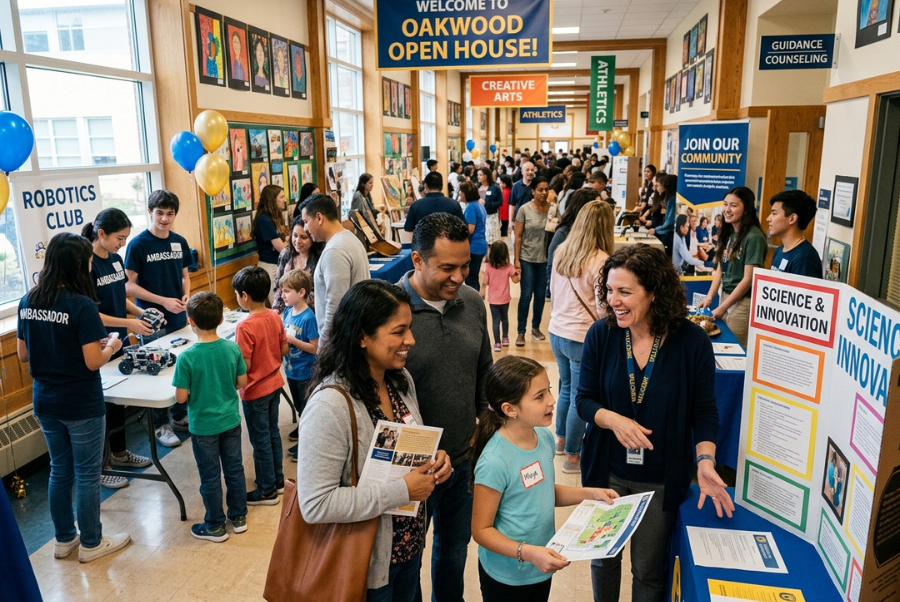
Once parents find your school, they evaluate:
- Academic programs
- Student outcomes
- Reviews and testimonials
- Campus facilities
- Extracurricular opportunities
Content marketing plays a major role here by answering questions and demonstrating your school’s strengths.
Step 3: Generate Inquiries
Strong calls to action encourage prospective families to:
- Request information
- Schedule campus tours
- Attend open houses
- Contact admissions
Every inquiry becomes a potential enrollment opportunity.
Step 4: Nurture Prospects
Many families take weeks or months to decide.
AI-powered automation can:
- Send follow-up emails
- Deliver reminders
- Answer common questions
- Schedule appointments
- Track prospect engagement
This improves conversion rates without increasing administrative workload.
Step 5: Convert Enrollments
Consistent communication and streamlined admissions processes help move prospective families from inquiry to enrollment.
Schools that actively nurture leads often outperform schools that rely solely on passive inquiry forms.
How Much Does Marketing for Schools Cost?
One of the most common questions school administrators ask is how much digital marketing will cost.
The answer depends on goals, competition, geographic market, and enrollment targets.
Typical Cost Ranges
| Marketing Activity | Monthly Investment |
| SEO Campaigns | $1,000–$5,000+ |
| Google Ads | $1,500–$10,000+ |
| Social Media Advertising | $500–$5,000+ |
| Reputation Management | $300–$2,000+ |
| AI Automation Systems | $500–$3,000+ |
| Full Marketing Program | $3,000–$20,000+ |
Factors Affecting Cost
Several variables influence marketing budgets:
- Enrollment goals
- School type
- Local competition
- Geographic targeting
- Advertising platforms
- Existing online presence
- Website quality
A school seeking 20 additional enrollments annually will typically require a smaller budget than a regional institution targeting hundreds of new students.
Cost vs. Lifetime Student Value
One important consideration is student lifetime value.
If one enrolled student generates tuition revenue over multiple years, even relatively high marketing costs can produce substantial returns.
This perspective helps schools evaluate marketing as an investment rather than an expense.
Digital Marketing Options for Schools
Not every strategy works equally well for every institution. The best approach depends on your enrollment goals, timeline, and available resources. Many schools achieve the strongest results by combining multiple strategies rather than relying on a single marketing channel.
Search Engine Optimization (SEO)
SEO improves visibility when families search for:
- Private schools
- Charter schools
- Religious schools
- Preschools
- Educational programs
SEO often provides long-term lead generation benefits because strong rankings can continue generating traffic and inquiries for years. Schools focused on sustainable enrollment growth and long-term brand visibility should consider SEO a foundational strategy.
Best for: Schools seeking consistent enrollment growth over time.
Google Ads
Google Ads offers immediate visibility by placing your school in front of families actively searching for educational options.
Benefits include:
- Fast lead generation
- Geographic targeting
- Enrollment-focused campaigns
- Measurable results
Schools often use Google Ads during enrollment seasons, open house promotions, or when they need to increase inquiries quickly.
Best for: Schools that need immediate enrollment inquiries or want to promote specific programs and events.
Social Media Marketing
Social media helps schools:
- Showcase school culture
- Highlight student achievements
- Share events and announcements
- Engage with current and prospective families
Platforms such as Facebook, Instagram, and YouTube can strengthen brand awareness and trust by giving families a glimpse into daily school life.
Best for: Schools looking to build community engagement and reinforce their reputation.
Email Marketing
Email remains highly effective for nurturing prospective families after they express interest.
Automated campaigns can:
- Share admissions information
- Promote upcoming events
- Answer frequently asked questions
- Guide families through the enrollment journey
Consistent communication helps schools stay top-of-mind throughout the decision-making process.
Best for: Schools that already receive inquiries and want to improve inquiry-to-enrollment conversion rates.
AI Automation
AI tools help schools:
- Respond faster to inquiries
- Automate follow-ups
- Improve lead management
- Reduce administrative workload
Schools using automation frequently see improved response times and stronger inquiry conversion rates because prospective families receive timely communication.
Best for: Schools handling a high volume of inquiries or seeking greater efficiency from their admissions team.
Which Strategy Should Schools Prioritize?
- If you need faster enrollment growth, prioritize Google Ads supported by email follow-up.
- If your goal is long-term visibility and sustainable enrollment, invest in SEO.
- If your admissions team struggles with follow-up, consider implementing AI automation.
- If your school already receives inquiries but few convert into applications, strengthen your email nurturing strategy.
- If community awareness is a priority, focus on social media marketing to build trust and engagement.
In many cases, the most effective school marketing plans combine several of these strategies to support both short-term enrollment goals and long-term growth.
Is Marketing for Schools Worth It? (ROI Analysis)
For most schools, digital marketing delivers measurable enrollment growth when implemented strategically.
Potential Benefits
Schools often experience:
- More inquiries
- Increased campus tours
- Higher enrollment rates
- Better brand visibility
- Improved community engagement
Example ROI Scenario
Imagine a school spends:
- $3,000 monthly on marketing
- Generates 25 inquiries
- Converts 5 enrollments
If each student generates significant tuition revenue over several years, the return can substantially exceed marketing costs.
Long-Term Value
Unlike traditional advertising, digital marketing assets continue generating value.
Examples include:
- SEO rankings
- Content libraries
- Reputation improvements
- Automated workflows
These assets compound over time and often reduce future acquisition costs.
Key Takeaway
The highest ROI usually comes from combining:
- SEO
- Google Ads
- Reputation Management
- AI Follow-Up Systems
Rather than relying on a single marketing channel.
What to Expect When Implementing a School Marketing Strategy
Schools should understand that results vary by channel.
First 30 Days
Typical activities include:
- Website optimization
- Campaign setup
- Tracking implementation
- Content planning
30–90 Days
Schools may begin seeing:
- Increased traffic
- More inquiries
- Improved engagement
3–12 Months
Longer-term improvements often include:
- Higher search rankings
- Increased enrollment applications
- Stronger brand recognition
- Lower cost per inquiry
Consistency is critical. Marketing campaigns often perform best when maintained throughout the enrollment cycle rather than only during recruitment periods.
How to Choose a Marketing Partner for Your School
Selecting the right marketing partner can significantly impact results.
Look for agencies that understand:
- Education marketing
- Lead generation systems
- SEO
- Paid advertising
- Marketing automation
Questions to ask include:
- Do you have experience with school marketing?
- How do you measure enrollment-focused ROI?
- What reporting is provided?
- How do you track inquiries and conversions?
- What automation systems do you recommend?
The best partners focus on enrollment outcomes rather than vanity metrics like clicks and impressions alone.
Key Takeaways
- Marketing for schools is essential for sustainable enrollment growth.
- SEO and Google Ads help schools attract qualified families.
- AI automation improves inquiry response and follow-up.
- Marketing costs vary based on goals and competition.
- Long-term ROI can be significant when measured against student lifetime value.
- Consistent digital marketing often outperforms sporadic campaigns.
Frequently Asked Questions
How long does it take to increase enrollment through digital marketing?
Paid advertising can generate inquiries within days, while SEO often takes several months to produce significant organic traffic. Most schools begin seeing measurable improvements within 60–90 days.
Is SEO or Google Ads better for schools?
Both serve different purposes. Google Ads generates immediate visibility, while SEO provides long-term traffic and lead generation. Combining both often delivers the strongest results.
What is the best marketing strategy for schools?
The best marketing strategy for schools typically combines SEO, Google Ads, social media engagement, reputation management, and automated follow-up systems. The right mix depends on your enrollment goals, budget, and target audience.
What is the biggest mistake schools make with marketing?
Many schools focus solely on awareness while neglecting lead nurturing and follow-up. Prospective families often require multiple interactions before making enrollment decisions.
Can AI help schools increase enrollment?
Yes. AI can automate follow-up communications, answer common questions, schedule appointments, and improve response times, helping schools convert more inquiries into enrollments.
How much should a school spend on marketing?
Budgets vary based on enrollment goals and competition. Many schools invest between $3,000 and $20,000+ monthly depending on the scope of services and desired growth.
Conclusion
Marketing for schools is one of the most effective ways to increase enrollment, strengthen community awareness, and attract qualified families. By combining SEO, Google Ads, social media, reputation management, and AI-powered automation, schools can build a predictable enrollment pipeline and support long-term growth.
If your school is ready to generate more qualified inquiries and improve enrollment outcomes, schedule a strategy session with Binary Ideas Local Marketing. Our team can help you identify the digital strategies best suited to your enrollment goals and create a plan designed to deliver measurable results.
Binary Ideas Local Marketing
9525 4th Place, Lorton, VA 22079
Phone: (703) 690-9726
Website: https://binaryideas.com/
Contact Us :https://binaryideas.com/contact-us/
Internal Links
- Learn more about AI Automation Services
- Explore Local SEO Services
- Discover Google and Facebook Ads Solutions
- Read: What Is Local SEO and How It Works
Recommended External Resources
- U.S. Department of Education: https://www.ed.gov/
- National Center for Education Statistics (NCES): https://nces.ed.gov/fastfacts/
- Harvard Graduate School of Education – Usable Knowledge: https://www.gse.harvard.edu/ideas/