

Getting more website traffic doesn’t always lead to more customers. Conversion rate optimization for lead generation focuses on increasing the percentage of visitors who take meaningful actions, such as filling out a contact form, requesting a consultation, or scheduling a discovery call. Instead of spending more money on advertising, CRO helps businesses generate more leads from the traffic they already have.
Many businesses invest heavily in SEO, Google Ads, Facebook Ads, and social media marketing but overlook what happens after visitors arrive on their website. If your landing pages fail to build trust, answer questions, or make taking the next step easy, valuable prospects may leave without converting. Conversion Rate Optimization (CRO) addresses these challenges by improving the user experience and removing obstacles that prevent visitors from becoming qualified leads.
Get More Value from Every Website Visitor
If your business is attracting website traffic but not generating enough inquiries, it may be time to optimize your website instead of simply increasing your advertising budget.
Binary Ideas Local Marketing
Address: 9525 4th Place, Lorton, VA 22079
Phone: (703) 690-9726
Our team helps businesses identify conversion barriers, improve landing page performance, and create data-driven optimization strategies that turn more visitors into qualified leads.
What Is Conversion Rate Optimization?

Conversion Rate Optimization (CRO) is the systematic process of improving a website so that a higher percentage of visitors complete desired actions. These actions are known as conversions and may include:
- Requesting a quote
- Booking a consultation
- Completing a contact form
- Calling your business
- Downloading a guide
- Scheduling an appointment
- Starting a live chat
- Purchasing a product
Rather than focusing only on increasing website traffic, CRO improves how effectively your existing traffic converts into real business opportunities.
For example, imagine two businesses each receive 2,000 monthly website visitors. Company A converts only 2% of visitors, producing 40 leads each month. Company B improves its website experience and raises its conversion rate to 5%, generating 100 leads from the same amount of traffic.
Without spending additional money on advertising, Company B gains 60 more potential customers simply through better optimization.
Why Conversion Rate Optimization Matters for Lead Generation
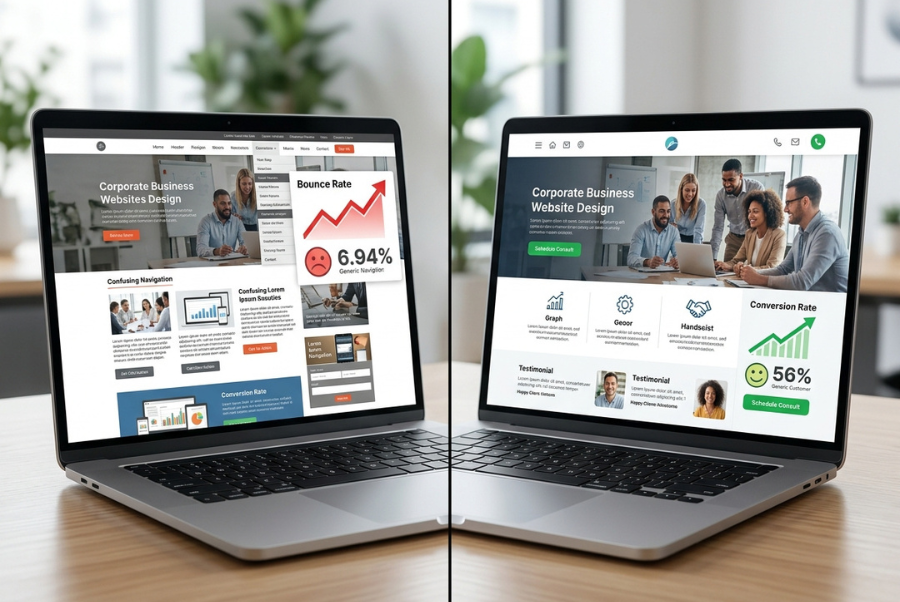
Many businesses assume that generating more website traffic will automatically result in more leads. In reality, traffic alone does not guarantee business growth. If visitors encounter friction during their journey—whether through confusing navigation, unclear messaging, a lack of trust, or a complicated conversion process—they may leave without taking action.
These obstacles reduce the effectiveness of your marketing efforts and limit the return on every visitor your website attracts. Instead of focusing solely on increasing traffic, Conversion Rate Optimization (CRO) improves the experience after visitors arrive by identifying conversion barriers, testing improvements, and making it easier for prospective customers to complete meaningful actions.
Rather than asking, “How can we attract more visitors?”, CRO shifts the focus to a more valuable question:
“How can we help more of our existing visitors become customers?”
For many businesses, improving conversion rates delivers faster, more cost-effective results than continually increasing advertising spend because it maximizes the value of the traffic they already have.
Signs Your Website Needs Conversion Rate Optimization

Many business owners don’t realize their website has conversion problems until they examine their analytics. Several warning signs may indicate that your website is underperforming.
Common indicators include:
- High website traffic but very few inquiries
- High bounce rates on important landing pages
- Visitors spending very little time on your website
- Low contact form completion rates
- Paid advertising generating expensive leads
- Strong search rankings but limited conversions
- Visitors abandoning forms before submission
- Mobile users converting far less than desktop users
These issues don’t necessarily mean your marketing campaigns are failing. In many cases, they indicate that your website isn’t effectively guiding visitors toward taking action.
The encouraging news is that many of these problems can be resolved through structured optimization rather than increasing your advertising budget.
How Conversion Rate Optimization Fits into Your Marketing Strategy
Conversion Rate Optimization should not replace SEO, Google Ads, or social media marketing. Instead, it strengthens every marketing channel by improving what happens after visitors arrive on your website.
Think of your marketing strategy as a complete lead generation system:
- SEO brings organic visitors.
- Google Ads attract high-intent prospects.
- Social media creates awareness.
- Email marketing nurtures relationships.
- Conversion Rate Optimization ensures more of those visitors become qualified leads.
When these channels work together, businesses often experience lower acquisition costs, stronger return on investment, and more predictable lead generation.
Rather than constantly increasing marketing spend, CRO helps maximize the value of every click your business already earns.
How Conversion Rate Optimization Works
Conversion Rate Optimization is not based on guesswork. Instead, it follows a structured process of collecting data, identifying friction points, testing improvements, and measuring results. The objective is to make informed decisions that increase conversions while enhancing the overall user experience.
A typical CRO process includes the following steps:
1. Analyze Website Data
The first step is understanding how visitors interact with your website. Analytics platforms can reveal:
- Which pages receive the most traffic
- Where visitors leave the website
- Which devices they use
- How long they stay on each page
- Which pages generate the most leads
Behavior-tracking tools such as heatmaps, session recordings, and scroll maps provide additional insights into where users click, where they hesitate, and where they abandon the conversion process.
When prioritizing optimization efforts, it’s often most effective to focus first on high-traffic, high-intent pages—such as service pages, landing pages, and contact pages—because improvements to these pages typically deliver the greatest impact on lead generation and overall marketing ROI.
2. Identify Conversion Barriers
Once enough data has been collected, the next step is identifying what’s preventing visitors from taking action. Common barriers include:
- Slow page load times
- Poor mobile usability
- Confusing page layouts
- Weak headlines
- Generic calls-to-action
- Excessively long forms
- Lack of customer reviews or testimonials
- Missing trust indicators such as certifications or guarantees
Even seemingly minor issues can have a measurable impact on conversion rates.
3. Develop Hypotheses
Instead of making random design changes, CRO professionals create hypotheses based on real user behavior.
For example:
- Reducing a contact form from eight fields to four may increase submissions.
- Moving the primary call-to-action above the fold may improve click-through rates.
- Adding client testimonials near the contact form may build trust and reduce hesitation.
Each hypothesis is designed to solve a specific problem identified during the analysis stage.
4. Test and Measure
The proposed improvements are then tested using methods such as A/B testing or multivariate testing. One version serves as the control, while another includes the new variation. Performance metrics are compared to determine which version generates more conversions. To ensure reliable results, A/B tests should run until they reach statistical significance, helping businesses make decisions based on meaningful data rather than short-term fluctuations.
This continuous cycle of testing, learning, and refining helps businesses make evidence-based improvements rather than relying on assumptions.
How Much Does Conversion Rate Optimization Cost?
The cost of Conversion Rate Optimization varies depending on the complexity of the website, the volume of traffic, and the scope of optimization required. Businesses should view CRO as an investment that improves the performance of existing marketing efforts rather than as an isolated expense.
Typical pricing models include:
| Service | Typical Price Range |
| One-Time CRO Audit | $500–$2,500 |
| Landing Page Optimization | $750–$3,000 per page |
| Monthly CRO Services | $1,000–$5,000+ per month |
| Enterprise CRO Programs | $5,000–$20,000+ monthly |
Several factors influence pricing, including:
- Website size and complexity
- Number of landing pages
- Monthly website traffic
- Required testing frequency
- Analytics setup and reporting
- Integration with CRM or marketing automation systems
For many businesses, improving conversions by just one or two percentage points can generate substantially more revenue without increasing advertising spend, making CRO one of the highest-return digital marketing investments.
Proven CRO Strategies That Generate More Leads
While every business requires a customized optimization plan, several strategies consistently improve lead generation across industries.
Improve Your Value Proposition
Visitors should understand within seconds what your business offers, who it helps, and why they should choose you. Clear messaging reduces confusion and encourages users to continue exploring your website.
Strengthen Your Calls-to-Action
Generic buttons such as “Submit” or “Click Here” often underperform. Action-oriented CTAs like “Schedule Your Free Consultation,” “Request a Personalized Quote,” or “Get Your Custom Marketing Plan” provide greater clarity and motivation.
Build Trust Throughout the Buyer Journey
Trust is a major factor in online decision-making. Including testimonials, case studies, client logos, certifications, industry awards, and review ratings can reassure visitors that your business is credible and capable of delivering results.
Optimize for Mobile Users
With a significant portion of website traffic coming from smartphones, responsive design, fast-loading pages, and mobile-friendly forms are essential. A poor mobile experience can dramatically reduce conversions, even if desktop performance is strong.
Is Conversion Rate Optimization Worth the Investment?
For most businesses, the answer is yes—especially if you’re already investing in SEO, Google Ads, social media, or other lead generation campaigns. Conversion Rate Optimization increases the value of every marketing dollar by helping more visitors become qualified leads.
Consider this example:
- Monthly website visitors: 5,000
- Current conversion rate: 2%
- Monthly leads: 100
If your conversion rate improves to 4%, your monthly leads double to 200 without increasing website traffic. Instead of paying for additional clicks, you’re making better use of the audience you’ve already attracted.
Beyond generating more leads, effective CRO can also:
- Reduce cost per lead (CPL)
- Improve return on ad spend (ROAS)
- Increase sales opportunities
- Enhance user satisfaction
- Strengthen overall marketing ROI
- Support long-term business growth
This is why many organizations prioritize optimizing their existing funnel before increasing their advertising budget. Improving conversion efficiency often delivers faster and more sustainable returns than simply driving more traffic to an underperforming website.
How to Choose the Right Conversion Rate Optimization Partner
Not every agency or consultant approaches CRO the same way. Since optimization relies heavily on data, testing, and continuous improvement, it’s important to choose a partner with a proven, systematic process.
When evaluating a CRO provider, consider asking these questions:
- Do they begin with a comprehensive website and analytics audit?
- How do they identify conversion barriers?
- What testing methods do they use?
- Which key performance indicators (KPIs) do they track?
- How frequently will they report results and recommend improvements?
- Can they integrate CRO with SEO, paid advertising, and marketing automation?
- Do they provide case studies or measurable performance improvements?
A reputable CRO partner should focus on measurable business outcomes rather than promising unrealistic conversion increases. Sustainable improvements are achieved through ongoing testing, analysis, and refinement.
Key Takeaways
Conversion Rate Optimization is one of the most effective ways to increase lead generation without continually increasing your marketing budget.
Remember these key points:
- CRO focuses on converting more existing website visitors into qualified leads.
- Small improvements in conversion rates can produce significant business growth.
- Data, testing, and continuous optimization drive better decisions than guesswork.
- Optimized landing pages improve the performance of SEO, Google Ads, email marketing, and social media campaigns.
- Investing in CRO often reduces customer acquisition costs while improving overall marketing ROI.
Businesses that consistently analyze and optimize their websites are better positioned to maximize every visitor and build a predictable lead generation system over time.
Frequently Asked Questions
What is a good conversion rate for lead generation?
A good conversion rate depends on your industry, traffic source, and business model. Many service-based businesses achieve conversion rates between 2% and 5%, while highly optimized landing pages may perform significantly better.
How long does Conversion Rate Optimization take to produce results?
Some improvements, such as simplifying forms or improving page speed, may produce measurable gains within weeks. More comprehensive optimization programs that involve multiple rounds of testing often deliver stronger results over several months.
Does CRO replace SEO or Google Ads?
No. CRO complements your existing marketing efforts. SEO and paid advertising generate visitors, while Conversion Rate Optimization helps convert those visitors into leads more efficiently.
What tools are commonly used for Conversion Rate Optimization?
Businesses often use analytics platforms, heatmaps, A/B testing software, session recordings, and user behavior tracking tools to identify opportunities and measure improvements.
Can small businesses benefit from CRO?
Absolutely. Even modest increases in conversion rates can significantly improve lead generation and marketing ROI for small businesses with limited advertising budgets.
Conclusion
Driving more traffic to your website is only part of building a successful lead generation strategy. To achieve sustainable business growth, you also need a website that turns visitors into qualified leads. That’s where conversion rate optimization for lead generation can make a measurable difference.
By analyzing user behavior, identifying conversion barriers, testing improvements, and continuously refining the user experience, businesses can increase conversions, reduce customer acquisition costs, and maximize the return on their existing marketing efforts. Even small improvements in your conversion rate can lead to significant gains in leads and revenue without increasing your advertising budget.
If your website is attracting visitors but not generating enough inquiries, it may be time to optimize your conversion strategy rather than simply investing in more traffic.
Ready to turn more website visitors into qualified leads? Binary Ideas Local Marketing helps businesses improve website performance through data-driven Conversion Rate Optimization (CRO), AI Automation, Local SEO, paid advertising, and conversion-focused digital marketing strategies.
Binary Ideas Local Marketing
Address: 9525 4th Place, Lorton, VA 22079
Phone: (703) 690-9726
Website: https://binaryideas.com/
Contact Us: https://binaryideas.com/contact-us/
Explore our related resources:
- What Is AI Automation for Businesses and How It Drives More Leads
- How to Reduce Cost Per Lead Using AI and Optimization Strategies
- How to Build a Predictable Lead Generation System for Your Business
- Service Page: AI Automation Services