
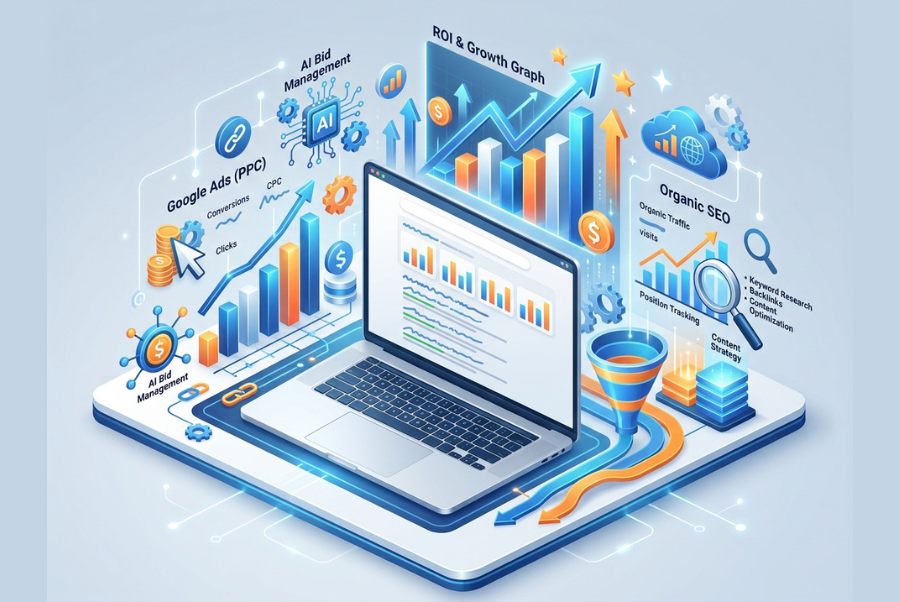
If you’re wondering how to combine SEO and paid ads for ROI, the answer is simple: use paid advertising to generate immediate qualified traffic while building SEO for sustainable organic visibility. Together, these strategies help businesses generate more qualified leads, lower customer acquisition costs, and maximize marketing ROI.
Many businesses mistakenly view SEO and paid advertising as competing strategies. In reality, they work best together. Paid ads deliver immediate visibility, while SEO builds long-term authority and trust. Combined, they create a marketing system that supports both short-term results and sustainable growth.
Ready to Build a Marketing Strategy That Delivers Better ROI?
Binary Ideas Local Marketing helps businesses combine Local SEO, Google Ads, AI Automation, and conversion optimization into one lead generation system designed for long-term growth.
Binary Ideas Local Marketing
9525 4th Place, Lorton, VA 22079
Phone: (703) 690-9726
What Does It Mean to Combine SEO and Paid Ads?
Search Engine Optimization (SEO) improves your website’s visibility in organic search results through content optimization, technical improvements, user experience, and authority building.
Paid advertising, primarily Google Ads, delivers immediate visibility by placing your business in front of targeted searches through paid campaigns.
Although both channels target search traffic, they serve different purposes:
| SEO | Paid Ads |
| Long-term investment | Immediate traffic |
| Builds authority | Generates instant visibility |
| Lower long-term acquisition cost | Predictable scaling |
| Sustainable rankings | Budget-dependent visibility |
| Continuous lead generation | Immediate testing opportunities |
Rather than replacing one another, SEO and paid advertising work together to support every stage of the customer journey.
How SEO and Paid Ads Work Together
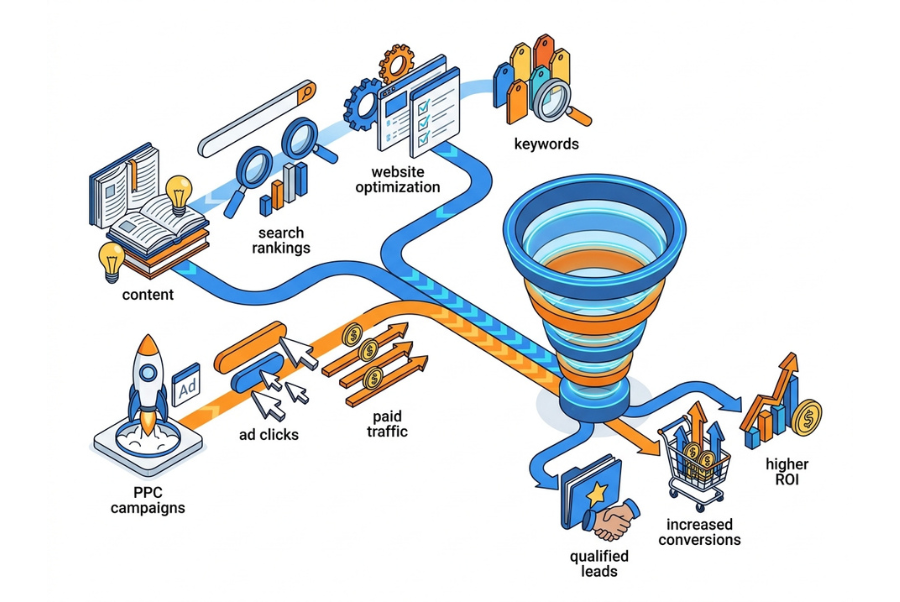
Rather than running independently, SEO and paid advertising become significantly more effective when integrated into a unified marketing strategy.
For example:
- Paid ads immediately drive traffic to new landing pages.
- SEO identifies high-performing keywords worth long-term investment.
- Paid campaigns reveal high-converting search terms faster than SEO alone.
- Organic content improves Quality Scores by supporting relevant landing pages.
- Remarketing campaigns reconnect with visitors initially acquired through SEO.
For example, when launching a new service, Google Ads can begin generating qualified leads immediately while your SEO campaign builds long-term organic visibility. As rankings improve, you can reduce paid spending on those keywords and redirect your advertising budget toward new growth opportunities, creating a continuous cycle of lead generation and marketing efficiency.
Why Businesses Should Never Rely on Only One Channel
Many companies unknowingly limit their growth by depending entirely on either SEO or paid advertising.
SEO Alone
SEO is incredibly valuable, but results require patience. Competitive industries may take several months before producing consistent rankings.
Challenges include:
- Slow initial growth
- Algorithm updates
- Competitive keyword difficulty
- Longer ROI timeline
Paid Ads Alone
Paid advertising delivers immediate results but has limitations.
These include:
- Traffic stops when budgets stop
- Increasing cost-per-click
- Rising competition
- Continuous investment required
Businesses relying exclusively on paid traffic often experience rising acquisition costs over time.
Combining both channels reduces these weaknesses while amplifying their strengths.
Cost of Running SEO and Paid Ads Together
One of the biggest questions businesses ask is whether combining both strategies costs significantly more.
The answer depends on business goals, market competition, and growth targets.
Costs can also vary based on your industry, geographic targeting, and the competitiveness of the keywords you’re pursuing. Businesses operating in highly competitive local markets or targeting multiple service areas often require larger budgets than those serving smaller or less competitive regions.
Typical monthly investment may include:
| Service | Typical Monthly Range |
| Local SEO | $800–$2,500+ |
| Google Ads Management | $500–$2,000+ |
| Ad Spend | $1,000–$10,000+ |
| Landing Page Optimization | Varies |
| Conversion Tracking | Usually included |
Although the total investment appears higher, integrated campaigns frequently generate better ROI because every marketing channel supports the others instead of operating independently.
For many businesses, this approach lowers the overall cost per qualified lead over time.
Factors That Affect Marketing ROI
Several factors influence how effectively SEO and paid advertising work together.
Industry Competition
Highly competitive industries typically require larger advertising budgets and stronger SEO efforts. Examples include:
- Legal services
- Medical practices
- Home improvement
- Real estate
- Financial services
Less competitive markets often achieve results more quickly.
Website Quality
Even the best marketing campaigns struggle if visitors land on a slow or poorly designed website. A high-converting website should include:
- Fast loading speeds
- Mobile optimization
- Clear calls-to-action
- Trust signals
- Simple navigation
- Optimized landing pages
Your website serves as the conversion engine behind both SEO and paid campaigns.
Conversion Optimization
Driving more traffic is only part of the equation. Testing and improving key elements can significantly increase ROI, including:
- Headlines
- Forms
- Call-to-action buttons
- Images
- Testimonials
- Offers
Small improvements in conversion rates often deliver a better return than simply increasing advertising spend.
Keyword Strategy
Not every keyword should be targeted through paid advertising. Businesses often separate keywords based on search intent:
SEO-focused keywords
- Educational searches
- Long-tail informational content
- Frequently asked questions
- Evergreen topics
Paid advertising keywords
- High buying intent
- Local service searches
- Emergency services
- Competitive commercial phrases
Using each channel for the keywords it performs best with helps maximize overall marketing ROI.
How to Build an Integrated SEO and Paid Ads Strategy
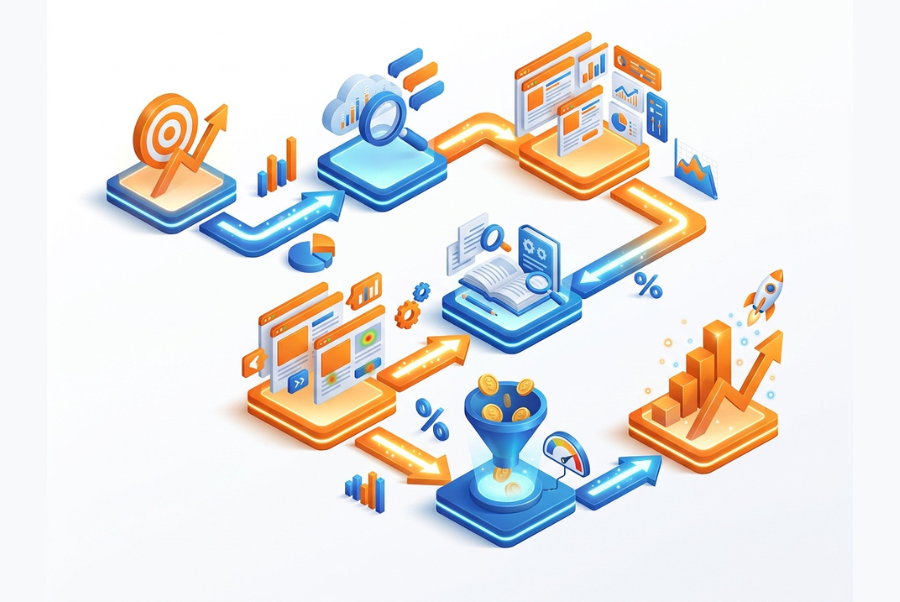
Successfully combining SEO and paid advertising isn’t about running two separate campaigns—it’s about creating one unified marketing system where each channel supports the other. Businesses that strategically integrate SEO and Google Ads often achieve higher conversion rates, lower customer acquisition costs, and stronger long-term growth.
Follow this practical framework:
1. Start with Clear Business Goals
Before investing in SEO or paid ads, define what success looks like. Your goals may include:
- Generating more qualified leads
- Increasing online sales
- Booking more appointments
- Growing brand awareness
- Expanding into new service areas
- Launching a new product or service
Once your objectives are clear, determine how each channel contributes. Paid ads generate immediate momentum, while SEO builds sustainable long-term growth.
2. Use Google Ads to Gather Market Data
One of the biggest advantages of paid advertising is speed. Instead of guessing which keywords customers use, Google Ads provides real-world performance data within days or weeks.
You can quickly identify:
- Which keywords generate phone calls
- Which landing pages convert best
- Which headlines receive the highest click-through rates
- Which geographic locations perform best
- Which offers generate the most leads
Rather than waiting months for SEO rankings, use paid campaigns to validate what works. Those insights can then guide your SEO strategy.
For example, an HVAC company may discover through Google Ads that “emergency AC repair” generates the most phone calls. Creating an SEO page targeting that same keyword helps build long-term organic traffic while gradually reducing dependence on paid advertising.
3. Build SEO Around Proven Keywords
After identifying profitable search terms, create high-quality SEO content around those topics instead of relying on assumptions.
Examples include:
- Service pages
- Educational blog articles
- Frequently Asked Questions
- Case studies
- Industry guides
- Comparison articles
Targeting keywords with proven commercial intent increases the likelihood of attracting qualified organic traffic over time.
4. Create Dedicated Landing Pages
Many businesses send paid traffic to their homepage, reducing conversion rates. Instead, create landing pages designed around a single objective.
An effective landing page should include:
- A compelling headline
- A clear explanation of the offer
- Benefits instead of just features
- Trust signals such as reviews or certifications
- Frequently asked questions
- A strong call-to-action
- A prominently displayed contact form or phone number
Well-optimized landing pages support both SEO and paid advertising by improving user experience, search relevance, and conversion performance.
Using SEO to Improve Google Ads Performance

Many business owners don’t realize that SEO improvements can actually make paid advertising campaigns more effective.
Better Landing Pages Increase Quality Score
Google evaluates landing page quality when determining Quality Score.
Higher-quality landing pages often result in:
- Lower cost per click (CPC)
- Better ad positions
- Higher click-through rates
- Lower advertising costs
- Improved user experience
SEO naturally encourages improvements such as:
- Faster page loading
- Mobile responsiveness
- Better content organization
- Relevant keyword usage
- Helpful information
These same improvements benefit Google Ads campaigns.
Strong Organic Presence Builds Trust
Imagine a potential customer searches for your business.
They see:
- Your Google Ad
- Your organic website listing
- Helpful blog articles
- Positive reviews
- Google Business Profile
Appearing multiple times on the search results page creates a stronger impression of credibility than relying on paid advertising alone.
Consumers are more likely to trust businesses that consistently appear throughout search results.
Organic Content Supports Every Stage of the Buying Journey
Not every visitor is ready to purchase immediately.
Some users search:
- What is Local SEO?
- How much does Google Ads cost?
- SEO vs Google Ads
These informational searches may not convert immediately, but quality SEO content introduces your business early in the decision-making process. Later, remarketing ads can reconnect with these visitors when they’re ready to take the next step, creating a seamless customer journey.
Common Mistakes When Combining SEO and Paid Ads
Even businesses investing in both strategies often miss opportunities because they manage them independently.
Avoid these common mistakes:
Managing SEO and Paid Ads in Isolation
When SEO and paid advertising operate independently, valuable insights remain isolated.
Instead, share:
- Keyword data
- Conversion reports
- Landing page performance
- Customer questions
- Search trends
Collaboration produces better decisions across both channels.
Measuring Only Traffic Instead of Revenue
High website traffic doesn’t necessarily mean marketing success.
Track metrics that directly impact business growth, including:
- Qualified leads
- Cost per acquisition
- Customer lifetime value
- Conversion rate
- Return on ad spend (ROAS)
- Overall marketing ROI
Focusing on revenue rather than traffic helps allocate budgets more effectively.
Failing to Reallocate Budgets Based on Performance
Many businesses continue investing the same amount in paid advertising even after SEO begins generating consistent organic traffic.
Regularly reviewing keyword performance allows you to shift advertising budgets toward new opportunities while letting high-performing organic pages generate traffic naturally. This approach improves overall marketing efficiency and maximizes ROI.
Ignoring Conversion Tracking
Without accurate tracking, it’s impossible to know which channel deserves credit for conversions.
Implement tools such as:
- Google Analytics 4
- Google Tag Manager
- Google Ads Conversion Tracking
- Call tracking software
- CRM integration
Reliable data allows smarter optimization decisions and ensures marketing budgets are invested where they generate the greatest return.
Is It Worth Combining SEO and Paid Ads?
For most businesses, the answer is yes. Although combining SEO and paid advertising requires a larger upfront investment, it often delivers stronger long-term ROI. Paid ads generate immediate qualified leads, while SEO builds sustainable organic traffic that reduces reliance on advertising over time.
Businesses that integrate both strategies can benefit from:
- More consistent lead generation
- Better visibility across search results
- Lower long-term customer acquisition costs
- Improved brand credibility and trust
- Greater flexibility as market conditions change
Rather than choosing between SEO and paid ads, treat them as complementary investments. Paid campaigns deliver immediate results, while SEO builds a long-term digital asset that continues attracting qualified visitors.
Key Takeaways
To maximize marketing ROI, combine SEO and paid advertising as part of one integrated strategy.
Remember these key points:
- Use Google Ads for immediate visibility and faster testing.
- Invest in SEO to build long-term authority and organic traffic.
- Let paid campaign data guide your SEO keyword strategy.
- Optimize landing pages for both paid and organic visitors.
- Measure success using leads, conversions, and ROI—not just website traffic.
Businesses that integrate both channels are better positioned for predictable, scalable growth.
Frequently Asked Questions
Should small businesses invest in both SEO and Google Ads?
Yes, if the budget allows. Google Ads generates leads quickly, while SEO builds long-term visibility, creating a balanced and sustainable marketing strategy.
Which should I start with: SEO or paid ads?
If you need immediate leads, start with paid advertising while building your SEO foundation. As organic rankings improve, SEO can gradually reduce your reliance on paid traffic.
Can SEO reduce my Google Ads costs?
Indirectly, yes. Better landing pages, faster website performance, and an improved user experience can increase Google Ads Quality Scores, potentially lowering your cost per click.
How long does it take to see results?
Google Ads can generate traffic almost immediately, while SEO typically takes several months to build authority and rankings. Using both provides short-term results while supporting long-term growth.
How should I split my budget between SEO and Google Ads?
There isn’t a one-size-fits-all answer. Businesses that need immediate leads often allocate more budget to Google Ads initially while investing consistently in SEO. As organic rankings improve, spending can gradually shift toward SEO to reduce long-term customer acquisition costs.
Conclusion
Knowing how to combine SEO and paid ads for ROI helps businesses build a more predictable and scalable digital marketing strategy. Rather than treating SEO and paid advertising as separate initiatives, integrating them creates a unified system where insights, data, and performance improvements strengthen both channels.
Over time, this approach improves lead quality, reduces customer acquisition costs, and supports sustainable long-term growth. Businesses that align SEO and paid advertising under a single strategy are better positioned to adapt to changing market conditions and maximize the return on every marketing investment.
If you’re ready to build an integrated digital marketing strategy that combines Local SEO, Google Ads, AI Automation, and conversion optimization, Binary Ideas Local Marketing can help. Learn more about our Google and Facebook Ads service to see how we help businesses generate qualified leads and improve marketing ROI, or contact us to discuss a customized strategy tailored to your business goals.
Binary Ideas Local Marketing
9525 4th Place, Lorton, VA 22079
Phone: (703) 690-9726
Explore our related resources:
- What Is Local SEO and How It Helps You Rank and Get More Leads
- SEO vs Google Ads: Which One Gives Faster ROI for Local Businesses?
- How AI Improves Google Ads Performance and Reduces Costs
- Service Page: Google and Facebook Ads
- Contact Us: https://binaryideas.com/contact-us/